
That persistent drip in the spare room isn’t just a minor nuisance; it’s a clear signal that your home’s primary defence is failing. For many homeowners, the sight of pooling water on a flat surface brings a familiar sense of anxiety, particularly when previous patches have failed to stop the damp. You shouldn’t have to worry about structural damage every time the clouds gather over Oxfordshire. You deserve a home that remains dry and secure, regardless of the season.
This guide will help you achieve that peace of mind by exploring the most reliable methods for flat roof waterproofing Oxford property owners can invest in today. We’ll show you how to identify hidden vulnerabilities and choose high-performance systems that withstand thermal movement and heavy rainfall. We will also preview the latest BS 6229:2025 standards for roof falls and compare the durability of EPDM, GRP, and liquid membranes. By the end, you’ll have the knowledge needed to select a long-term solution and a specialist you can trust.
Key Takeaways
- Identify the “Big Three” warning signs that indicate your current roof is failing and learn how to address them before structural damp sets in.
- Discover why modern, cold-applied systems are the gold standard for flat roof waterproofing Oxford residents can rely on for long-term fire safety.
- Compare the lifespans and benefits of EPDM, GRP, and liquid membranes to find the most durable material for your specific property.
- Establish a seasonal maintenance routine to ensure your roof and guttering remain watertight throughout the unpredictable Oxfordshire weather.
- Learn how a methodical approach to installation, including rigorous flood testing, provides the ultimate peace of mind for your home.
Recognising the Signs: Why Flat Roof Waterproofing in Oxford is Essential
In its simplest form, flat roof waterproofing Oxford involves the application of a specialised membrane designed to prevent water ingress whilst accommodating the natural structural movement of a building. It’s a critical layer of protection that often goes unnoticed until it fails. When we talk about professional waterproofing, we are referring to modern waterproofing systems that offer a seamless barrier against the elements. For homeowners in Oxford, where the weather can shift from humid summer heat to biting winter frost, this barrier is your first line of defence against costly structural damage.
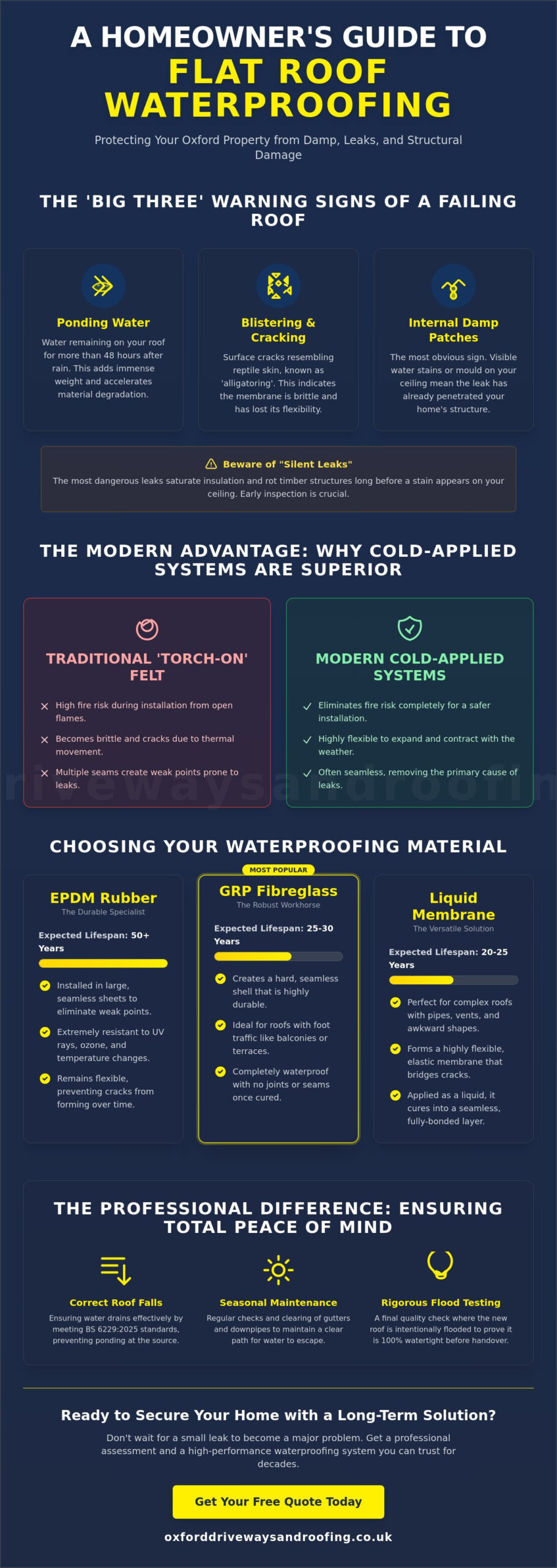
Identifying a failure early can save thousands of pounds in restoration costs. We typically look for the “Big Three” warning signs. First is ponding water, where rain fails to drain away. Second is blistering, often called “alligatoring,” where the surface cracks like a reptile’s skin. Finally, there are internal damp patches. These signs indicate that the integrity of your roof is compromised. However, some of the most dangerous issues are “silent leaks.” These occur when water slowly saturates the insulation layers without appearing on your ceiling immediately. By the time a visible stain appears, the timber structure may have already begun to rot. Understanding the full scope of moisture-related damage is essential; our guide to roof damp proofing services in Oxfordshire explains how to accurately distinguish between penetrating damp and condensation before the problem worsens.
The Problem with Ponding Water
Ponding is defined as water that remains on the roof surface for more than 48 hours after rainfall. This isn’t just an aesthetic issue. The sheer weight of standing water puts immense stress on the underlying structure, which can lead to sagging over time. Additionally, these pools act like a magnifying glass for the sun, accelerating UV degradation and weakening the membrane. We advise residents in Oxford and Abingdon to check their roofs from a safe vantage point a couple of days after a heavy downpour. If the water hasn’t cleared, your drainage or roof fall likely needs professional attention.
Thermal Movement and Oxford’s Climate
Oxfordshire’s climate presents a specific challenge for traditional roofing materials like bitumen felt. During our warmer months, the roof surface can reach high temperatures, causing it to expand. In the winter, it contracts rapidly. Older, rigid materials often become brittle under these cycles, eventually cracking and allowing moisture to seep through. Modern membranes are engineered to remain flexible, stretching and shrinking with the building without losing their watertight seal. This flexibility is vital for enduring the UK’s damp, cold winters. For a broader understanding of how different materials stand up to our region’s frost-thaw cycles and heavy rainfall, our guide to weather resistant roofing Oxford homeowners can rely on provides essential context. Ensuring your guttering and downpipes are clear is equally important, as they work in tandem with your waterproofing to move water away from your home’s foundations.
Modern Waterproofing Systems: EPDM, GRP, and Liquid Membranes Explained
The technology behind flat roof waterproofing Oxford has evolved significantly in recent years. We have moved away from the traditional, high-risk “torch-on” felt methods that required open flames on your roof. Today, we prioritises cold-applied systems. These modern solutions eliminate fire risks during installation whilst providing a far superior seal against the British weather. Whilst some homeowners confuse damp proofing with waterproofing, it is vital to understand the distinction. Damp proofing typically manages rising moisture in walls, whereas roof waterproofing creates an impermeable, flexible shield designed to withstand standing water and direct environmental pressure.
Adhering to the latest UK Building Regulations (Part L) is a core part of our process. These standards ensure that when we waterproof a roof, we also consider its thermal performance and insulation. This holistic approach doesn’t just keep the rain out; it helps regulate your home’s temperature and reduces energy waste. Choosing the right material depends on your roof’s primary function and its exposure to the elements.
EPDM Rubber: The Durable Specialist
Ethylene Propylene Diene Monomer, or EPDM, is a high-performance synthetic rubber that has become a industry favourite. Its greatest strength lies in its application; it is often installed in large, seamless sheets. By reducing the number of joints, we eliminate the primary failure points where leaks typically begin. EPDM is incredibly resilient against UV rays and ozone, meaning it won’t crack or peel under the summer sun. With a potential life expectancy of up to 50 years, it represents a fantastic long-term investment. You can find more detail on how these membranes are fitted in our guide to Professional Flat Roof Installation Oxfordshire.
GRP Fibreglass: The Toughest Shield
Glass Reinforced Plastic (GRP) is a multi-layer system that cures into a monolithic, stone-hard surface. It is the ideal choice for roofs that double as balconies or terrace areas because it is virtually impenetrable and can withstand regular foot traffic. Beyond its strength, GRP offers a clean, contemporary aesthetic. It is available in various grey tones that complement Oxford’s historic architectural heritage perfectly. Because it is applied as a cold liquid that hardens, it creates a completely seamless finish that is as attractive as it is functional.
For roofs with highly complex shapes, multiple skylights, or intricate pipework, liquid waterproofing membranes offer unmatched versatility. These systems are applied similarly to paint but cure into a durable, rubber-like skin that follows every contour of the roof. This makes them excellent for targeted repairs or refurbishing an existing surface without a full tear-off. If you are considering an upgrade, exploring our range of Flat Roof Systems is an excellent starting point to ensure your home remains protected for decades.
Evaluating Your Options: Which Waterproofing Method Suits Your Property?
Choosing the right approach for flat roof waterproofing Oxford requires a careful balance between three critical factors: the intended lifespan, your available budget, and how you plan to use the space. Whilst it’s tempting to opt for the lowest initial quote, we always remind our clients that the cheapest option is often the dearest in the long run. A failed seal leads to saturated timbers and ruined ceilings, turning a small saving into a major expense. For large residential extensions, EPDM is often the most cost-effective per square metre due to its rapid installation. GRP is the superior choice for garages or balconies that require a hard-wearing, walkable finish. For roofs with complex shapes or existing coverings that are still structurally sound, liquid membranes provide a bespoke solution that avoids a full tear-off.
We also ensure that your roofline integrates perfectly with your home’s walls. This often involves professional Damp Proofing at the junctions to prevent moisture from bridging the gap between the roof membrane and the masonry. This holistic view of your property’s exterior ensures that water is managed effectively from the highest point down to the ground.
New Build vs. Retrofit Waterproofing
When refurbishing an older property, we must decide whether to strip the roof back to the rafters or apply a liquid overlay. Stripping back is usually necessary if the timber deck is soft or damp. According to the National Federation of Roofing Contractors (NFRC), ensuring the roof deck is dry and stable is the foundation of any successful project. If we perform a full strip-back, we must also comply with Part L building regulations by upgrading the insulation to modern thermal standards. This doesn’t just keep the rain out; it makes your home significantly warmer and ensures the system complies with current British Standards for fire safety.
Suitability for Commercial vs. Residential
Oxford’s commercial properties and businesses often require minimal disruption to their daily operations. Liquid membranes are excellent for these environments as they can be applied quickly and quietly, often without the need for the building to be vacated. Residential homeowners, however, usually prioritise aesthetic appeal and how the roof interacts with the rest of the property. If your flat roof is visible from a garden or terrace, we can coordinate the finish with your existing Fencing and Landscaping to create a cohesive look. This methodical planning ensures the result is both functional and visually pleasing for years to come.
Maintenance and Prevention: Keeping Your Flat Roof Watertight Year-Round
Ensuring the long-term success of flat roof waterproofing Oxford depends on a consistent maintenance regime. You’ve invested in a quality system; protecting that investment requires just a few hours of attention twice a year. We recommend a seasonal approach, focusing on specific tasks in the Autumn and Spring to prepare for the harshest shifts in weather. In Autumn, the priority is clearing organic matter. Oxfordshire’s many wooded areas mean leaves and twigs can quickly accumulate on a flat surface, creating a damp mat that prevents proper drainage. In the Spring, a post-winter check allows you to spot any minor abrasions or drainage blocks caused by winter storms before they escalate.
Moss is a common sight in our region, but it’s a silent enemy of the flat roof. It acts like a sponge, holding moisture against the membrane for weeks on end. This added weight, combined with trapped silt, can obstruct the natural fall of the roof and lead to the ponding issues we discussed earlier. Clearing this debris safely is essential, but it must be done with care to avoid puncturing the delicate surface. We strongly advise against using aggressive DIY “patch kits” found in retail shops. These products often trap moisture against the timber deck rather than sealing it, which accelerates rot and makes a professional repair much more difficult later. If you notice dark patches on your ceiling or a musty smell in your loft alongside surface deterioration, our professional roof damp proofing services can help you identify whether you are dealing with penetrating damp or condensation and provide a permanent solution. Understanding the full range of durable, weather resistant roofing solutions available to Oxford homeowners can help you make more informed decisions about preventative care and material upgrades.
The Essential Gutter Connection
A flat roof is only as effective as its ability to shed water. If your guttering and downpipes are blocked, water has nowhere to go. This leads to “back-pooling,” where water sits against the membrane edges or seeps beneath the flashing at the wall junctions. For homes near heavy foliage, installing leaf guards is a sensible precaution. These guards prevent debris from entering the downpipes in the first place, ensuring that even during a heavy Oxfordshire downpour, water moves away from your property foundations as intended.
Professional Inspections vs. DIY
Walking on a flat roof is inherently risky. An older deck might have soft spots or “silent leaks” that you can’t see from the ground, making it dangerous for an untrained homeowner. A professional inspection goes far beyond a simple glance. We check the integrity of every seam, ensure the flashing is secure around chimneys, and confirm the underlying deck remains stable. Often, a minor adjustment to a gutter or a small chimney repair prevents a total roof failure. If you suspect your roof is underperforming, booking a survey with a local roofing specialist is the safest way to prevent minor issues from becoming major structural repairs.
Professional Standards: How Oxford Driveways And Roofing Secures Your Property
Choosing a contractor for flat roof waterproofing Oxford is a decision that impacts the long-term stability of your home. At Oxford Driveways And Roofing Ltd, we position ourselves as the “Trusted Specialist” by adhering to a methodical, disciplined approach that removes the guesswork from property maintenance. We don’t believe in quick fixes or superficial patches. Instead, we use premium-grade materials and proven techniques to ensure every project delivers a safe and guaranteed outcome. Our team treats your roof as a complex system where every detail, from the structural deck to the final seal, must work in perfect harmony.
Our installation process is thorough and predictable. It begins with an exhaustive site preparation phase where we address any underlying timber issues or drainage flaws. Once the new membrane is expertly applied, we perform a final flood test. This rigorous check involves temporarily blocking the outlets and covering the roof with water to verify its integrity before we sign off on the work. This level of precision provides you with the peace of mind that your home is genuinely watertight. For clients looking for a complete property overhaul, we often coordinate our roofing work with other exterior services, such as professional block paving, to ensure your home’s kerb appeal matches its structural excellence.
Our Commitment to Oxfordshire Homeowners
We take great pride in our local presence across Oxford, Abingdon, and Swindon. Unlike firms that rely on rotating sub-contractors, we use our own directly employed, skilled staff. This allows us to maintain high standards of craftsmanship and consistency across every project. Our team is seasoned in the specific challenges of the local climate, and we invite all prospective clients to view our portfolio of local flat roofing projects. Seeing our work first-hand is the best way to understand the durability and finish we provide for Oxfordshire residents.
The Quote Process: Transparency and Accuracy
Building trust starts with a transparent and accurate estimate. We provide no-obligation, detailed quotes that clearly outline the scope of work, materials used, and the total cost. We don’t believe in “hidden extras” that appear halfway through a job. To ensure our pricing is precise, we conduct a full structural assessment of your roof before providing a figure. This allows us to identify any hidden rot or insulation needs that might affect the project’s success. If you are ready to secure your home’s future, contact us today for a professional flat roof assessment in Oxford and discover the difference that specialist care makes.
Securing Your Home’s Future with Expert Waterproofing
Protecting your property from the unpredictable Oxfordshire weather requires more than just a temporary patch. We have explored how modern, cold-applied systems like EPDM, GRP, and liquid membranes provide a seamless, fire-safe barrier that traditional felt simply cannot match. By understanding the signs of failure early and maintaining your drainage systems, you can avoid the stress of recurring leaks and structural damp. Investing in professional flat roof waterproofing Oxford property owners can trust is an investment in your home’s longevity and your own peace of mind.
With over 20 years of local experience, Oxford Driveways And Roofing Ltd is your steady partner for all flat roof systems. Our team specialises in the precise installation of EPDM, GRP, and liquid membranes, ensuring every project is backed by fully guaranteed workmanship. We take the uncertainty out of property maintenance through transparent assessments and methodical standards. Don’t wait for the next heavy downpour to test your roof’s integrity. Book Your Free Flat Roof Inspection and Quote Today and take the first step towards a leak-free home. We look forward to helping you protect your property with a solution that’s built to last.
Frequently Asked Questions
How long does flat roof waterproofing typically last?
The lifespan of your roof depends entirely on the chosen material. Modern EPDM rubber systems have a potential life expectancy of up to 50 years. Liquid-applied membranes typically last between 15 and 25 years, though they can often be recoated to extend their service. GRP systems are equally durable, providing a rigid shield that lasts for decades when installed by a specialist.
Can you waterproof a flat roof in the winter in Oxford?
Waterproofing can be carried out in winter, provided the weather remains dry. Whilst EPDM can be installed in colder temperatures, GRP and liquid systems require specific temperature windows to cure and bond correctly. We monitor local weather forecasts closely to ensure every installation occurs during an optimal window, preventing moisture from being trapped beneath the new membrane.
Is liquid waterproofing better than EPDM rubber?
Both systems offer excellent protection, but they serve different purposes. EPDM is ideal for large residential extensions because it uses large, seamless sheets. Liquid waterproofing is often the superior choice for roofs with complex shapes, numerous pipe penetrations, or for refurbishing an existing surface. A professional assessment will determine which system provides the most reliable outcome for your specific property.
How much does it cost to waterproof a flat roof in Oxfordshire?
The investment required for flat roof waterproofing Oxford depends on several variables. These include the total surface area, the choice of membrane, and whether the underlying timber deck requires repair. Because every project has unique structural needs, we provide detailed, no-obligation quotes after a thorough site inspection to ensure transparency and accuracy for our clients.
Do I need planning permission for a new flat roof waterproofing system?
Planning permission is rarely required for straightforward waterproofing replacements or repairs. However, you must comply with UK Building Regulations (Part L) if you are replacing more than 25% of the roof area, which typically involves upgrading the thermal insulation. If your property is a listed building or in a conservation area within Oxford, it’s always wise to consult the local planning authority first.
Can I walk on my flat roof once it has been waterproofed?
Most modern membranes can handle occasional foot traffic for maintenance purposes. If you intend to use your flat roof as a balcony or terrace, GRP is the most suitable option due to its stone-hard, impact-resistant finish. For EPDM or liquid systems, we can install specialised walkway mats or a reinforced top layer to protect the waterproofing from regular use.
What is the best way to stop water pooling on my flat roof?
Preventing water pooling, or “ponding,” requires a correct structural fall. According to the updated BS 6229:2025 standards, most flat roofs should have a minimum finished fall of 1:80 to ensure water flows towards the outlets. We achieve this through the use of tapered insulation or by adjusting the roof’s timber firrings during the installation process.
Does my home insurance cover flat roof leaks?
Home insurance policies typically cover damage caused by sudden, unforeseen events like storm-driven debris or impact. They rarely cover leaks resulting from gradual deterioration or a lack of routine maintenance. It’s important to review your policy details, as many insurers require proof of professional installation and regular inspections to honour a claim related to roof failure.