Your chimney is the hardest working part of your home, yet it’s often the most neglected until a damp patch or a worrying smell appears in your living room. If you’ve noticed crumbling mortar or staining on your chimney breast, you aren’t alone in feeling concerned about the hidden state of your flue. Ensuring the safety of your family means looking beyond the hearth; it often starts with a professional chimney stack repair Oxford homeowners can rely on to maintain structural integrity and prevent long term damage.
We understand that navigating HETAS requirements and the updated 2026 Building Regulations can feel overwhelming, especially when you’re worried about the risk of chimney fires or carbon monoxide leaks. This guide explains why a high quality flue liner is a vital investment for the efficiency and safety of your Oxfordshire property, whether it’s a historic terrace or a modern build. You’ll discover the practical benefits of modern lining materials, how they protect your masonry from corrosive gases, and what you need to know to ensure your heating system remains fully compliant and safe for years to come.
Key Takeaways
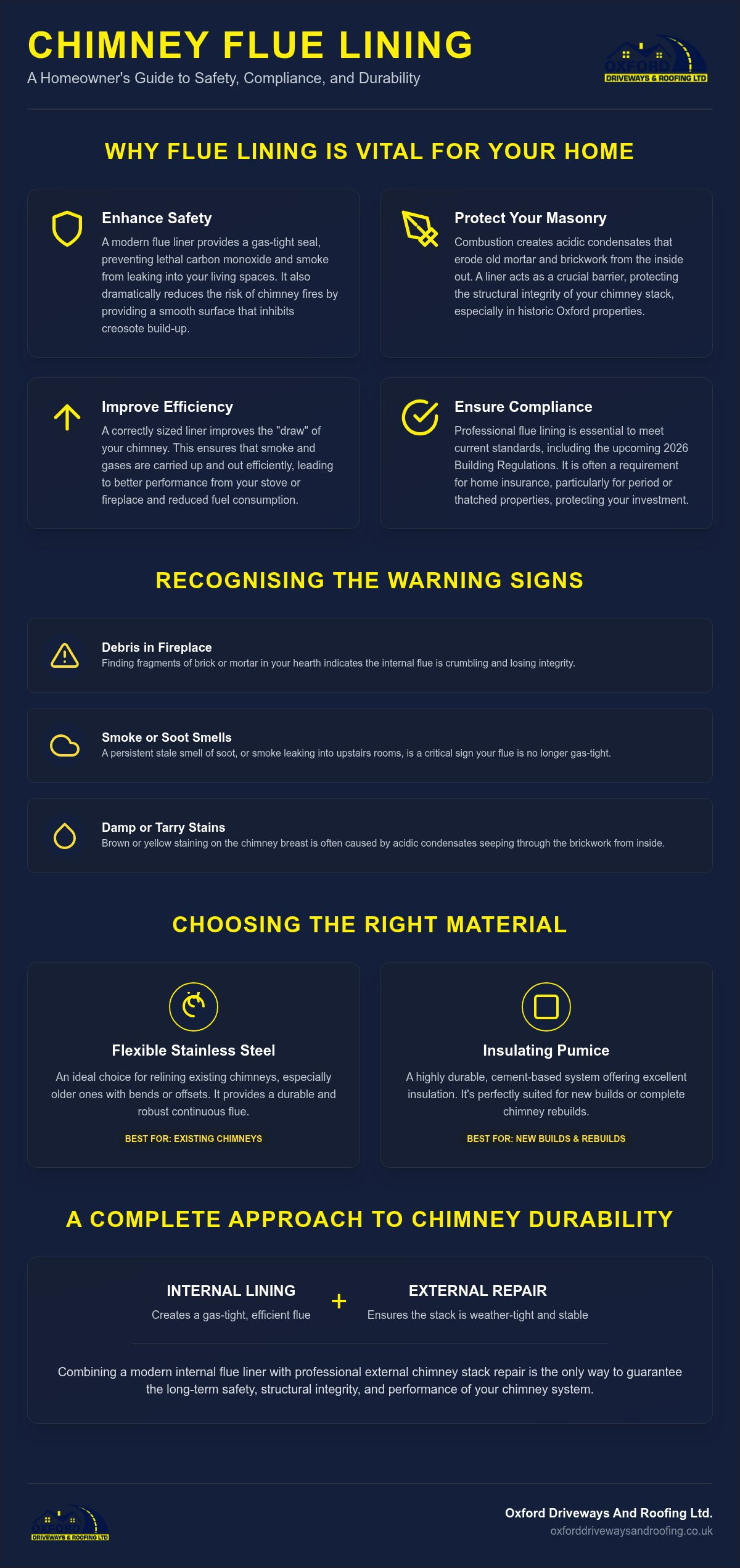
- Understand why a flue liner is a vital safety barrier that prevents dangerous gases from leaking through the aged masonry of historic Oxford homes.
- Recognise early warning signs like damp patches or smoke leaks that indicate you may need a professional chimney stack repair Oxford to restore your home’s safety.
- Evaluate the differences between flexible stainless steel and insulating pumice liners to choose the best material for your specific heating requirements.
- Learn how professional installation and compliance with the 2026 Building Regulations protect your property’s value and ensure your insurance remains valid.
- Discover the importance of a holistic approach that combines internal lining with external maintenance to secure the long term durability of your chimney.
What is Chimney Flue Lining and Why is it Vital for Oxford Homes?
A chimney flue liner acts as a secondary protective conduit within your masonry, designed to carry combustion gases from a fire or stove safely out of the building. To understand the foundational mechanics of this system, you might ask, What is a Chimney Liner? Essentially, it provides a smooth, continuous surface that prevents smoke and harmful byproducts from coming into contact with the internal brickwork. Without this barrier, the heat and chemicals produced by burning wood or coal eventually degrade the very structure meant to contain them.
In Oxford, many homes rely on chimneys built over a century ago. These original flues were often unlined or pargeted with a lime-based plaster that was never intended to last forever. Over decades of use, this lining crumbles, leaving the porous bricks and mortar joints exposed to heat and acidic condensation. This is where a professional chimney stack repair Oxford specialist becomes essential; they ensure the external structure remains weather-tight whilst the internal flue is modernised to meet 2026 safety standards. A modern liner also improves the “draw” of your chimney, ensuring smoke rises efficiently rather than lingering in the flue and cooling down too quickly.
The Role of Lining in Historic Oxford Architecture
Properties in areas like Botley or the historic city centre often feature solid-walled construction. These heritage buildings are particularly vulnerable because the acidic condensates produced by modern fuels can eat away at old lime mortar. A modern liner protects the structural integrity of this heritage brickwork by creating a physical shield. By installing a stainless steel or pumice system, we create a high-performance environment that manages heat effectively. This prevents the “bleeding” of tar and creosote through the stack, which often causes those unsightly, smelly brown patches on upstairs chimney breasts.
Safety First: Preventing Fire and Carbon Monoxide
Safety remains the primary driver for relining any Oxfordshire home. An old, cracked chimney can leak carbon monoxide into bedrooms or lofts, often without the occupants realising there’s a problem. A new liner provides a “gas-tight” promise, ensuring every bit of exhaust gas exits through the pot. It also significantly reduces the risk of chimney fires. Creosote and tar struggle to grip the smooth surface of a modern liner compared to the craggy, damaged surface of old masonry. For owners of thatched or period homes in the county, insurance providers now frequently mandate professional lining to mitigate these fire risks. Compliance with Approved Document J of the Building Regulations isn’t just a legal necessity for new stove installations; it’s a fundamental step in protecting your property’s long-term value.
Recognising the Signs Your Oxford Chimney Needs Relining
Spotting the early warning signs of a failing flue is the best way to prevent a minor maintenance issue from becoming a structural emergency. One of the most obvious indicators is finding debris, such as small bits of mortar or fragments of brick, scattered across your fireplace hearth. This suggests that the internal pargeting or the brickwork itself is beginning to perish. If you notice these fragments, it is likely that the protective barrier between your flue and the rest of your home is compromised, necessitating a professional chimney stack repair Oxford assessment to determine the extent of the decay.
Smoke leakage is another critical red flag that should never be ignored. If you notice a faint haze or the smell of woodsmoke in upstairs bedrooms or the loft space whilst the fire is lit, your flue is no longer gas-tight. This is often accompanied by a persistent, stale smell of soot that lingers even when the fire has not been used for days. These symptoms suggest that combustion gases are seeping through cracks in the masonry, posing a direct risk of carbon monoxide exposure to your household.
Damp Staining vs. Roof Leaks
Homeowners often mistake brown, tarry staining on upstairs chimney breasts for a simple roof leak. Whilst water ingress can certainly cause issues, these specific “weeping” patches are usually caused by hygroscopic salts and wood tars soaking through the bricks from the inside out. This happens when moisture in the flue meets old soot deposits, creating an acidic liquid that eats through lime mortar. In many cases, resolving this requires a dual approach; professional roofing repairs Oxfordshire can secure the external flashing, whilst a new liner prevents further internal “bleeding” through the masonry.
The Importance of a Professional Survey
A visual inspection from the hearth can only reveal so much. To truly understand the condition of a stack, a CCTV flue survey is essential. This technology allows us to identify hidden voids, bird nests, or structural shifts that aren’t visible to the naked eye. Under the UK Building Regulations (Approved Document J), any flue must be proven sound before a new appliance is commissioned. If the survey reveals significant internal collapse, it may be necessary to combine relining with structural chimney rebuilding to ensure the entire stack is stable and weather-tight. If you’re concerned about the state of your brickwork, arranging a professional chimney inspection can provide the clarity and peace of mind you need to enjoy your fire safely this winter.
Comparing Flue Lining Materials: Which is Right for Your Property?
Selecting the correct lining material is a technical decision that depends on your preferred fuel type, the age of your property, and the physical shape of your flue. Whilst many homeowners focus on the aesthetic of the stove or fireplace, the liner is the engine that drives the system’s performance. When undertaking a comprehensive chimney stack repair Oxford project, we evaluate several material options to ensure the internal lining matches the external structural work. For those unsure if a liner is required, the HETAS guidance on chimney lining provides a clear framework for assessing safety and efficiency needs.
- Stainless Steel Flexible Liners: These are the most frequent choice for retrofitting into existing masonry. They are installed in a single continuous length, making them quick to fit and highly cost-effective for standard chimneys.
- Pumice Liners: Made from volcanic rock, pumice is naturally insulating. It keeps flue gases warm, which improves draw and reduces condensation. It’s an ideal choice for new builds or when we are performing a full chimney reconstruction.
- FuranFlex: This is a thermosetting resin liner that is pulled through the flue as a flexible tube and then inflated with steam. It hardens to the exact shape of the chimney, making it perfect for historic Oxford properties with awkward bends or non-standard dimensions.
- Cast-in-situ Systems: These involve pumping a concrete-based mixture around an inflatable former. This method can actually strengthen a fragile or crumbling chimney stack by filling internal voids and bonding with the original masonry.
Flexible Steel: Grade 316 vs Grade 904
If you choose a stainless steel liner, you must select the correct grade for your fuel. Grade 316 is designed for gas or oil appliances and some seasoned wood use, but it’s less resistant to the acidic byproducts of coal or smokeless fuels. For multi-fuel stoves, Grade 904 is the industry standard. It’s a thicker, more durable alloy that stands up better to the higher temperatures and corrosive chemicals produced by mineral fuels. In the damp Oxfordshire climate, opting for Grade 904 often provides a longer lifespan, typically lasting up to 20 years with proper maintenance compared to the 10 to 15 years expected from Grade 316.
Heritage Solutions for Oxfordshire Cottages
Oxford’s architectural landscape, from the limestone cottages of the Cotswold fringes to the Victorian terraces of the city centre, requires a sympathetic approach. Historic masonry needs to “breathe” to prevent moisture from becoming trapped within the walls. When we install modern liners in heritage homes, we ensure the system provides a gas-tight seal without compromising the structural health of the old brickwork. Pumice or clay liners are often preferred in these settings because they offer thermal properties that closely mimic traditional materials whilst meeting 2026 safety standards. This balance preserves period features whilst giving you the peace of mind that your home is protected from the risks of flue leakage.
The Professional Flue Lining Process: What to Expect
A successful flue lining project is a methodical, step-by-step operation that ensures your heating system operates at peak performance whilst protecting your home’s structural integrity. Before any materials arrive, the process begins with a comprehensive sweep and inspection to clear soot, debris, or bird nests that might obstruct the new liner. This preparation is critical; even a small obstruction can cause hotspots or prevent the liner from seating correctly. Once the flue is clear, we establish safe access to the pot. For many properties, professional chimney stack repair Oxford services are often required to stabilise older masonry before the liner is dropped.
The liner is fed from the top and secured at the hearth and the chimney pot using specialist plates and cowls. We then back-fill the void between the liner and the original masonry with an insulating material like Vermiculite. This insulation is vital; it keeps the flue gases warm, which maintains the “draw” and prevents the condensation that leads to tar buildup. Finally, we conduct a rigorous smoke test to verify that the system is completely gas-tight and functioning as intended.
Safe Access and Property Protection
Oxford’s skyline is defined by its tall Victorian and Edwardian chimneys, particularly in areas like North Oxford or Headington. Safely reaching these heights requires more than just a ladder. We organise professional scaffolding or secure towers to provide a stable working platform. This approach isn’t just about safety; it allows for the precision required to feed the liner down the flue without damaging the internal brickwork. Inside your home, we maintain a “clean-work” protocol. Using heavy-duty dust sheets and HEPA-filtered vacuums, we ensure that the installation process doesn’t leave a trace of soot or dust in your living space.
Testing and Certification
We perform both Type 1 and Type 2 smoke tests to confirm the integrity of the new flue. Once we’re satisfied with the results, we provide the necessary certification for your home’s logbook. Whether it’s a HETAS certificate or a Building Control notification, this paperwork is essential for your property insurance and future house sales. Our commitment to high standards means every project is backed by a professional guarantee on both the premium materials used and our expert craftsmanship. If you’re planning a renovation, it’s wise to book a professional chimney survey to ensure your project starts on a solid foundation.
Expert Chimney Maintenance and Rebuilding in Oxfordshire
A new flue liner provides essential internal protection, but its performance is fundamentally linked to the condition of the external masonry. If the exterior brickwork is saturated with water, it can cool the flue gases too quickly, leading to the condensation issues discussed in previous sections. We often recommend integrating your lining project with a ridge tile replacement to ensure that the entire roofline is secure and weather-tight. A chimney doesn’t exist in isolation; it’s a vital part of your property’s primary defence against the British weather, and its external health is just as important as its internal safety.
Sometimes, a simple relining isn’t enough to guarantee long-term safety. If the stack is visibly leaning or the bricks are significantly spalled, a full chimney stack repair Oxford or a complete rebuild becomes the only safe solution. We’ve seen many cases where the external structure has become so porous that internal lining alone can’t prevent dampness from penetrating the home. Adding a high-quality cowl or bird guard at this stage is a small but vital step. These additions keep Oxfordshire’s jackdaws and pigeons from nesting in your new system, preventing blockages that could lead to dangerous smoke blow-back into your living rooms.
Chimney Stack Restoration and Repointing
Failing mortar joints are often the primary entry point for moisture. Our property maintenance services Oxford team specialises in identifying these vulnerabilities before they cause internal damage. When mortar crumbles, it allows rain to penetrate the heart of the stack, which can then freeze and expand, causing the bricks to shatter. For heritage properties in Abingdon or Faringdon, we use traditional lime mortar rather than modern cement. This choice is deliberate; lime mortar allows the building to breathe and prevents the stone or brick from cracking due to trapped moisture. Combining expert repointing with internal lining creates a comprehensive, dual-layer barrier against the elements.
Why Choose Oxford Driveways And Roofing Ltd.?
We take a “Trusted Specialist” approach to every project we undertake. We don’t just look at the flue in isolation; we evaluate the health of the whole roof to ensure total stability. Our goal is to alleviate the stress of property maintenance by providing clear, honest advice and results that are built to last. From Swindon to the smallest Oxfordshire village, our local reputation is built on reliability and precision. We use only premium-grade materials that are proven to withstand the test of time and heavy use. Every project we undertake comes with a comprehensive guarantee, giving you the peace of mind that your home is safe and your investment is protected for years to come.
Securing Your Oxfordshire Home for the Future
Ensuring your home remains a warm, safe sanctuary requires a proactive approach to chimney health. A high-quality flue liner acts as a vital conduit that protects your family from carbon monoxide whilst preserving the structural integrity of your masonry. Whether you’re managing a Victorian terrace or a Cotswold stone cottage, matching the right lining material to your specific heating needs is essential for long-term peace of mind. Safety shouldn’t be left to chance.
Often, these internal improvements are most effective when paired with a professional chimney stack repair Oxford homeowners can rely on to secure the external roofline. Our team specialises in Oxford heritage properties, using premium-grade materials for maximum durability. We provide the expertise you need to keep your fireplace running efficiently and safely. All our workmanship is fully guaranteed, giving you a reliable outcome for every project. To secure your property for the seasons ahead, Request a Professional Chimney and Roofing Survey today.
Frequently Asked Questions
How much does chimney flue lining cost in Oxford?
Costs vary depending on the height of your property, the material you choose, and the complexity of the installation. For a standard terrace, you must account for the liner itself, professional labour, and any necessary scaffolding to reach the pot safely. Structural issues within the stack or the need for a comprehensive chimney stack repair Oxford homeowners often require can also influence the final investment needed to secure the system.
Do I need a chimney liner for a wood burning stove?
Yes, it’s almost always necessary to install a liner when fitting a modern wood burning stove into an older masonry chimney. Modern stoves are highly efficient and produce cooler flue gases; without a liner, these gases can condense and cause tar buildup or leak through porous brickwork. Lining ensures your stove performs as intended whilst meeting the strict safety requirements of the 2026 Building Regulations.
How long does it take to install a chimney liner?
A professional installation typically takes between one and two days to complete, depending on the height of your home and the condition of the flue. The first day involves clearing any obstructions and preparing the access, whilst the second day focuses on feeding the liner, insulating the void, and conducting final smoke tests. Complex heritage projects in Central Oxford may require additional time for careful masonry preparation.
Can I install a chimney liner myself?
Whilst it’s physically possible, it’s strongly discouraged due to the legal and safety implications involved. Chimney lining is classified as building work under UK law, meaning it must be signed off by Building Control or installed by a HETAS-registered professional. A DIY attempt risks invalidating your home insurance and could lead to dangerous gas leaks if the system isn’t perfectly sealed and tested.
How long does a stainless steel chimney liner last?
A high-quality stainless steel liner typically has a lifespan of 15 to 20 years, depending on the grade of steel and how well the system is maintained. Grade 316 liners are suitable for seasoned wood but may degrade faster if you burn mineral fuels. For maximum durability, opting for Grade 904 steel and arranging annual professional sweeps will ensure the liner remains in peak condition for its full expected service life.
Do I need planning permission for chimney lining in Oxford?
Planning permission isn’t usually required for internal flue lining, but the work must comply with Building Regulations (Approved Document J). However, if your property is a listed building or located in one of Oxford’s many conservation areas, you should check with Oxford City Council before starting. Even if the work is internal, heritage restrictions sometimes apply to changes that affect the chimney’s structural integrity or external appearance.
What is the difference between 316 and 904 grade liners?
The primary difference lies in the alloy’s thickness and its resistance to corrosion from acidic combustion byproducts. Grade 316 is a standard option suitable for burning seasoned wood or gas, whilst Grade 904 is a superior, more robust alloy designed for the higher temperatures and corrosive chemicals produced by coal or smokeless fuels. Choosing Grade 904 provides greater longevity and is often the preferred choice for a long-lasting chimney stack repair Oxford project.
Will chimney lining stop damp on my chimney breast?
Yes, a professional liner will stop dampness caused by condensation and hygroscopic salts soaking through from the flue. By containing the hot gases within a sealed tube, the liner prevents moisture from meeting old soot deposits and bleeding through the brickwork. If the damp is caused by external water ingress, you may also need to address failing mortar or flashing through expert masonry restoration to ensure the stack is fully weather-tight.