In 2026, the choice between a tarmac vs resin driveway isn’t just about which colour looks best against your brickwork; it’s a decision that could determine whether you face a council enforcement notice or secure a decades-long investment. Most homeowners in Oxfordshire want a surface that looks premium but doesn’t require constant maintenance or a degree in planning law to install. You’ve likely worried about resin surfaces fading in the summer sun or tarmac becoming soft and looking “cheap” after just a few seasons. We understand that these concerns, coupled with the latest SUDS drainage regulations, can make the decision feel overwhelming for any property owner.
Discover the ultimate comparison between tarmac and resin driveways to choose the most durable, cost-effective, and attractive surface for your Oxfordshire property. This guide provides a clear look at how each material performs under the specific weather conditions of our region whilst maintaining full legal compliance. We’ll walk you through the structural differences, maintenance requirements, and the vital groundwork needed to ensure your new driveway enhances your home’s value for over 20 years without the need for planning permission.
Key Takeaways
- Learn the structural differences between heavy-duty tarmac and UV-stable resin-bound systems to determine which material best suits your property’s aesthetic and usage needs.
- Compare the long-term value of a tarmac vs resin driveway, weighing the immediate cost-effectiveness of traditional surfacing against the 25-year lifespan of modern resin.
- Understand why professional groundwork and sub-base preparation are the most critical factors in preventing sinking or cracking, regardless of your chosen surface.
- Gain clarity on Oxfordshire’s latest SUDS drainage regulations to ensure your new installation remains legally compliant and avoids the need for planning permission.
- Discover which surfacing option is superior for specific Oxford locations, from large rural estates to flood-prone areas near the Thames.
Tarmac vs Resin Driveway: Understanding the Fundamentals
Selecting the right surface for your home involves more than just picking a pretty finish. When comparing a tarmac vs resin driveway, we are looking at two distinct engineering approaches. Tarmac is a time-tested mixture of mineral aggregate and bitumen, prized for its heavy-duty resilience. It’s essentially a form of Asphalt concrete that provides a solid, dependable surface for vehicles. In contrast, resin-bound surfacing uses a blend of natural stones and clear UV-stable resin to create a decorative, porous finish that allows water to pass through naturally.
The choice often comes down to a balance between utility and aesthetics. Tarmac offers a clean, professional utility look that suits almost any property style, from traditional cottages to modern builds. Resin provides a decorative, contemporary finish that can be tailored with various stone colours and textures. However, you should understand that the choice isn’t only about the top two inches of material. A successful installation relies on the entire foundation. In fact, many high-quality resin driveways actually require a tarmac sub-base to provide the necessary structural strength, meaning the two materials often work together rather than in competition.
The Evolution of Tarmac Surfacing
Modern tarmac has come a long way from the basic “blacktop” used in previous decades. We now frequently use Stone Mastic Asphalt (SMA), which contains added fibres to prevent the surface from becoming soft during hot Oxfordshire summers. It remains the favourite choice for high-traffic residential streets in Oxford because it doesn’t crack or shift under the weight of multiple heavy vehicles. Whilst traditional black is still the most popular option, modern techniques allow for red or even green tints to complement your home’s exterior palette.
The Rise of Resin-Bound Systems
Resin-bound systems have gained massive popularity because they offer a smooth, seamless finish without the nuisance of loose stones. You must distinguish between resin-bound and resin-bonded systems; the former is fully permeable, which is essential for local drainage compliance. This material perfectly mimics the look of traditional gravel but stays firmly in place, eliminating the need for constant raking. It’s a sophisticated solution for modern homes where a high-end appearance is desired without the maintenance of traditional stone. Whether you are weighing up a tarmac vs resin driveway for a small terrace or a large manor, the decision starts with understanding these core material properties.
Technical Comparison: Installation and Structural Integrity
The longevity of your new surface depends less on the visible top layer and more on the engineering beneath it. When weighing up a tarmac vs resin driveway, the structural integrity is defined by the quality of the sub-base and the precision of the groundwork. Without a stable foundation, even the most expensive materials will eventually succumb to sinking, spreading, or cracking under the weight of modern vehicles. A professional installation ensures that the environmental challenges of Oxfordshire, such as heavy rainfall and temperature shifts, don’t compromise your investment.
Laying the Foundation: The Sub-base
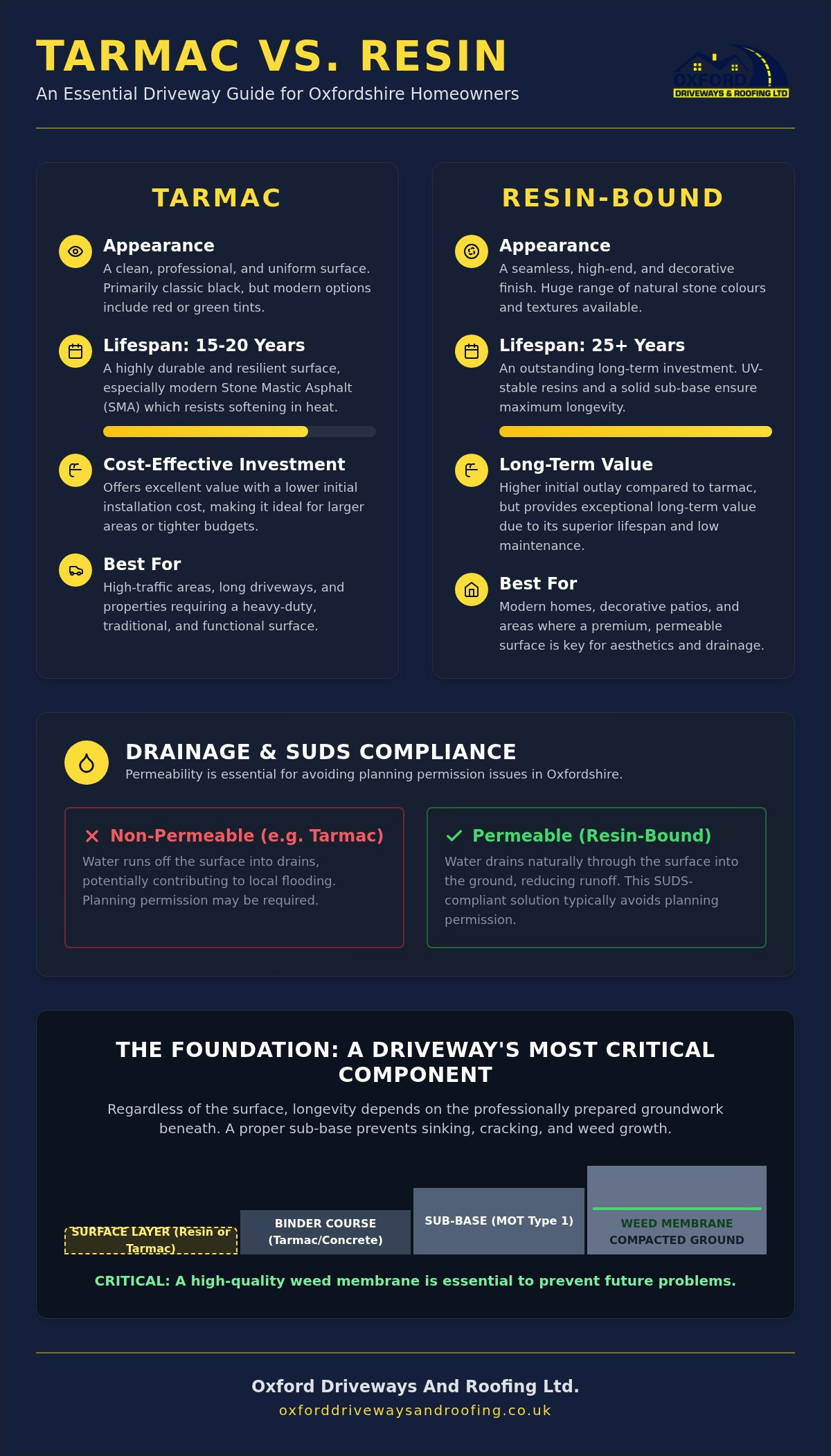
For a tarmac installation, we typically use a compacted MOT Type 1 or Type 3 sub-base. This provides the necessary load-bearing capacity to prevent the surface from shifting. A common misconception amongst homeowners is that resin-bound systems are a standalone surface. In reality, the “secret” to a durable resin finish is that it often requires a new tarmac or concrete base underneath it to achieve maximum stability. Skipping the installation of a high-quality weed membrane is a frequent mistake in Oxford projects; it’s a small step that prevents invasive growth from compromising the driveway’s edges over time.
Professional site preparation ensures that your property adheres to the UK government guidance on permeable surfacing, which is essential for managing runoff in flood-prone areas. To ensure your project starts with the right foundation, you can explore our professional Tarmac Surfacing and resin-bound options to see which suits your home’s groundwork needs.
Curing Times and Initial Use
The timeline for your project is heavily influenced by the material chosen and the unpredictable Oxfordshire weather. Tarmac is relatively forgiving during installation, though it shouldn’t be laid in torrential rain. Once compacted, it’s usually ready for foot traffic within a few hours, whilst we recommend waiting 48 hours before parking a car on it. Resin-bound systems are far more sensitive. They require strictly dry conditions and low humidity levels to cure correctly. If rain hits a resin surface before it has set, the finish can turn cloudy or fail to bond.
Installers must carefully monitor local humidity levels throughout the day. Resin typically takes 24 to 48 hours to fully set, during which time it must be kept completely clear of traffic. Edge restraints, such as concrete kerbs or decorative block paving, are vital for both materials. They act as a frame, keeping the driveway contained and preventing the edges from fraying or breaking away under pressure. This methodical approach to installation is what guarantees a tarmac vs resin driveway result that stands up to decades of use.
Performance Review: Durability, Cost, and Maintenance
Choosing between a tarmac vs resin driveway requires a realistic look at how each material handles the daily rigours of Oxfordshire life. Whilst both offer excellent longevity when professionally installed, their performance profiles differ significantly over time. A standard tarmac surface typically provides a reliable lifespan of 15 to 20 years, whereas a premium resin-bound system can last between 20 and 25 years. For owners of large Oxford estates, tarmac remains a highly cost-effective solution. It offers vast coverage and a professional finish without the premium price tag associated with high-end resin polymers.
Environmental factors play a massive role in the long-term appearance of your home. We only use UV-stable resins to prevent the unsightly yellowing that often plagues cheaper, non-specialist installations. This is particularly important for south-facing properties that receive direct sunlight throughout the day. Additionally, both materials must withstand the local frost-thaw cycles. Because resin is naturally porous, it allows water to expand within the gaps rather than forcing the surface to crack. Tarmac is also flexible, though it may require more attention as it ages to remain in peak condition. Always consult the Planning permission for front gardens guidance if you are considering changing your surface type, as this can affect your legal obligations.
Which Surface is More Durable?
Tarmac is exceptionally resilient against heavy vehicles and the “scuffing” caused by power steering in tight driveways. It’s a robust workhorse material. However, resin-bound systems offer superior resistance to weed growth and oil spills, which can sometimes degrade the bitumen in tarmac if left untreated. A common concern involves the use of skips; whilst tarmac handles concentrated weight very well, it can indent during heatwaves if the skip doesn’t have protective boards. Resin is equally tough, but any cracking is usually a symptom of a failing sub-base rather than a fault in the resin itself.
Long-term Maintenance and Repairs
Maintenance requirements vary between the two. You can easily refresh a faded tarmac drive using a professional bitmac sealer, which restores the deep black finish and adds a protective layer. Patching tarmac is a straightforward process that blends well over time. In contrast, patching resin is notoriously difficult. Achieving a perfect colour match with older stones is a challenge even for experts. For advice on keeping your surface in top condition, our property maintenance services Oxford guide provides essential tips for exterior care. Ultimately, the best choice depends on whether you prioritise the easy repairability of tarmac or the low-maintenance, weed-resistant nature of resin.
Drainage and Planning: Navigating SUDS in Oxfordshire
Managing surface water is a critical responsibility for any Oxford resident. With the city’s proximity to the Thames and known flood zones in Botley, Osney, and the surrounding meadows, your driveway choice directly impacts local flood resilience. Sustainable Urban Drainage Systems (SUDS) are not merely a recommendation; they are a legal framework designed to prevent rainwater from overloading public sewers and causing flash floods. When you weigh up the benefits of a tarmac vs resin driveway, understanding these regulations is essential to avoid potential enforcement notices or the need for a retrospective planning application.
The core rule for UK homeowners is straightforward. You don’t usually need planning permission if your new driveway uses a permeable surface or if the design directs water to a lawn or soakaway within your property. However, if you install a non-permeable surface larger than five square metres that drains directly onto a public highway, you must seek formal approval from the council. Resin-bound surfacing has become the modern standard for “planning-free” installations because its natural structure allows water to pass through into the ground instantly.
Permeability: Tarmac vs Resin
There is a significant technical difference between standard tarmac and its porous counterparts. Standard tarmac is impermeable, meaning water will sit on the surface or run off to the lowest point. Porous tarmac, or open-graded asphalt, allows some water through but can be prone to clogging if not maintained. In contrast, resin-bound systems are engineered for high-volume drainage. A standard resin-bound surface allows water to infiltrate at a rate of approximately 850 litres per square metre per minute, which easily handles even the most intense Oxfordshire downpours without pooling.
Local Oxford Planning Considerations
Oxford City Council maintains a proactive stance on front garden paving to protect the city’s character and manage urban runoff. If your heart is set on a traditional tarmac finish, we can still achieve compliance by installing professional soakaways or rain gardens. These features capture the runoff and allow it to dissipate into the soil naturally. Choosing a local specialist is vital in this regard; we understand the heavy clay content found amongst many Oxfordshire soils and can adapt the sub-base depth to ensure your drainage system remains effective. To ensure your home remains fully compliant with local laws, you can speak with our experts about a professional Resin Bound Driveways installation today.
Final Verdict: Which Driveway Should You Choose?
The decision between a tarmac vs resin driveway ultimately rests on your property’s specific demands and your long-term aesthetic goals. If you manage a large rural estate or require a heavy-duty surface for multiple commercial-grade vehicles, tarmac’s budget-friendly resilience is hard to beat. It remains the most practical choice for expansive areas where utility is the priority. Conversely, for modern residential homes where curb appeal and SUDS compliance are paramount, resin-bound surfacing offers a sophisticated, decorative finish that resolves drainage issues without compromising on style.
Many homeowners find that the perfect solution lies in a hybrid approach. Combining a durable tarmac centre with decorative borders from professional block paving specialists Oxford creates a high-end look at a more accessible price point. This method provides the structural strength of tarmac whilst adding the visual flair of stone or resin detailing. Regardless of the material you choose, the outcome depends on the precision of the groundwork. Entrusting your project to a seasoned professional ensures that your investment remains stable and attractive for decades.
Choosing Based on Property Style
Your home’s architectural character should guide your material choice. Tarmac’s clean, dark finish provides a striking contrast that beautifully complements traditional Cotswold stone properties found throughout Oxfordshire. Its understated appearance doesn’t compete with the natural texture of the stone. On the other hand, resin offers unparalleled customisation. You can select stone blends that mirror the exact tones of your home’s exterior, creating a seamless transition between the building and the driveway. For more detailed colour inspiration, our resin bound driveways Oxford guide explores the various aggregate mixes available.
Next Steps with Oxford Driveways and Roofing
Every property in Oxford or Abingdon presents unique challenges, from soil composition to existing drainage layouts. We don’t believe in one-size-fits-all solutions. Our team provides bespoke quotes based on a thorough site survey, ensuring that the sub-base we design is perfectly matched to your chosen surface. We use only premium-grade materials and back every project with a full guarantee for your peace of mind. To begin transforming your property’s entrance, Contact us for a free driveway consultation and let our experts guide you through the best options for your home.
Transform Your Oxford Property with Confidence
Choosing a new surface is a significant investment in your home’s stability and kerb appeal. You now understand that whilst tarmac offers heavy-duty durability for larger areas, resin provides a modern, permeable solution that navigates local drainage regulations without the need for planning permission. Ultimately, the choice in the tarmac vs resin driveway debate depends on your property’s specific architectural style and functional requirements. Our expert local Oxfordshire contractors ensure that every project is built on a foundation designed to last for decades.
We take the stress out of property maintenance by using only premium-grade materials and providing fully guaranteed work for your peace of mind. Whether you require the traditional strength of tarmac or the contemporary finish of resin, we are here to guide you through every step of the process with transparency and skill. Get your free, no-obligation driveway quote in Oxford today and take the first step toward a beautiful, compliant, and durable entrance for your home. We look forward to helping you achieve a result that stands the test of time.
Frequently Asked Questions
Is resin more expensive than tarmac for a standard driveway?
Resin-bound surfacing is generally considered a premium investment compared to traditional tarmac. The higher cost reflects the use of UV-stable polymers and specialist decorative aggregates that provide a 25-year lifespan. Whilst tarmac is more cost-effective for large utility areas, resin offers a unique aesthetic and natural drainage that many homeowners find worth the extra initial outlay.
Can you lay resin-bound surfacing directly over old tarmac?
It is possible to install resin over an existing tarmac surface, provided the base is structurally sound and free from significant damage. We must thoroughly clean the old tarmac and ensure it has no cracks or sinking areas that could compromise the new layer. If the foundation is crumbling, a full excavation is necessary to prevent the resin-bound system from failing prematurely.
Does a resin driveway crack in cold Oxfordshire winters?
A professionally installed resin-bound driveway is highly resistant to cracking during frost-thaw cycles. Because the material is naturally porous, water drains through the surface instead of sitting in puddles that could freeze and expand. This flexibility allows the driveway to adapt to temperature changes without the internal pressure that often causes rigid materials to fail during a typical British winter.
How long do I have to wait to drive on a new tarmac driveway?
You can usually walk on a new tarmac surface within a few hours, but we recommend waiting at least 48 hours before parking a vehicle on it. This allows the bitumen to harden sufficiently to support concentrated weight. In particularly warm weather, we might suggest a longer cooling period to prevent power steering from scuffing the surface whilst it is still settling.
Do I need planning permission for a resin driveway in Oxford?
When weighing up a tarmac vs resin driveway, the legal requirements for drainage are a major factor; resin-bound systems are naturally permeable and typically exempt from planning permission. Because they meet SUDS regulations by allowing water to soak into the ground, they don’t overload local sewers. Non-permeable surfaces larger than five square metres usually require a formal application unless water is directed to a soakaway.
Which surface is easier to keep clean, tarmac or resin?
Resin-bound surfaces are generally easier to keep clean because their seamless finish discourages weed growth and is simple to sweep. Tarmac is also low-maintenance but can attract moss in shaded areas or suffer from oil stains if the surface isn’t sealed. For both materials, a light pressure wash once or twice a year is usually enough to maintain a professional and tidy appearance.
Can tarmac driveways be any colour other than black?
Modern tarmac surfacing is available in several colours beyond the traditional deep black. Red and green are popular alternatives that can help a driveway complement specific Oxfordshire brickwork or surrounding garden landscapes. Whilst black remains the favourite for its classic and professional look, these tinted options provide homeowners with more flexibility to match their property’s unique character and style.
What happens if my resin driveway gets a stain?
Most common stains on a resin surface can be removed easily with warm water and a mild household detergent. For more stubborn marks like oil or grease, a specialist degreaser can be used without damaging the UV-stable resin bond. It is always best to treat any spills as soon as they happen to prevent them from penetrating the aggregate layers and affecting the long-term finish.