
Did you know that an estimated one in five UK homes is currently battling serious moisture issues that could lead to structural decay? If you’ve noticed damp patches on your rafters, you’re likely searching for the specific causes of condensation in loft to prevent further damage. It’s a common worry for homeowners who’ve invested in thick insulation to meet the latest energy standards, only to find that their roof feels like it’s suffocating under the extra layers.
We understand the anxiety that comes with the fear of structural rot and the potential for expensive remedial work. This guide will help you identify why moisture is building up and provide the professional strategies needed to protect your roof’s timber for the long term. We’ll explain the vital balance between modern insulation and essential ventilation, whilst showing you exactly how to tell the difference between a minor moisture build-up and a structural leak that requires expert intervention.
Key Takeaways
- Understand how the “Dew Point” creates moisture when warm household air hits cold roof surfaces.
- Identify how blocked vents and over-insulation act as primary causes of condensation in loft spaces, preventing your roof from breathing.
- Learn how modern domestic behaviours, such as drying clothes indoors, can contribute to significant hidden moisture build-up.
- Discover the risks of leaving damp untreated, from structural timber decay to the permanent loss of insulation efficiency.
- Explore professional ventilation solutions, including passive vents and mechanical systems, to protect your home’s long-term value.
What is Loft Condensation and Why Does it Occur?
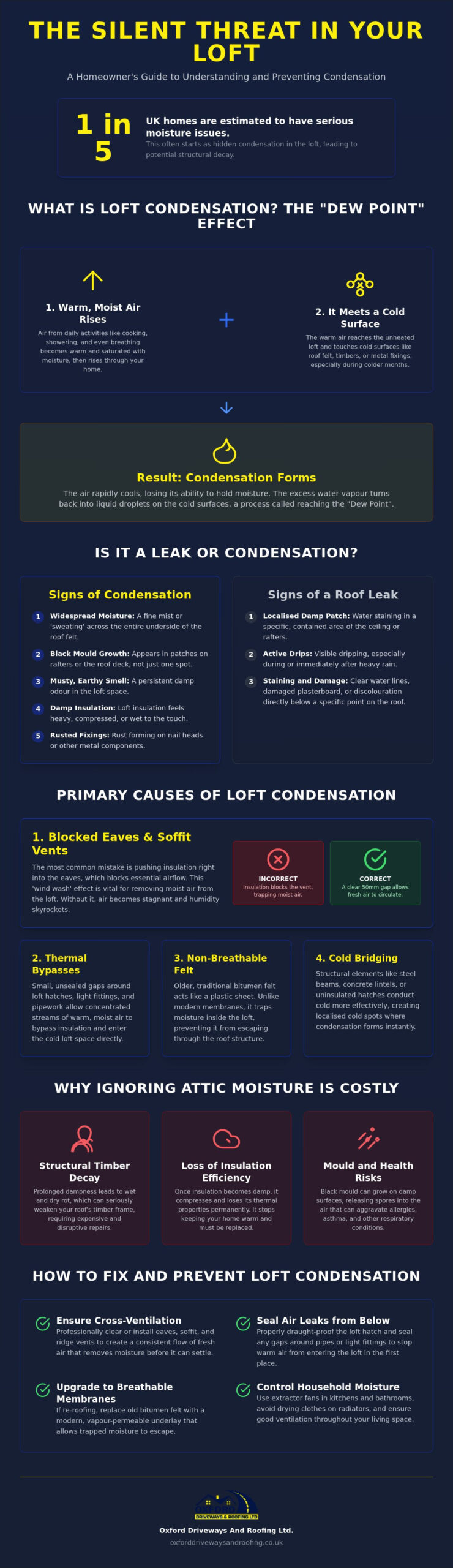
Loft condensation isn’t just a minor annoyance; it’s a physical reaction that occurs when warm, moist air from your kitchen, bathroom, or living room rises and meets a cold surface, such as your roof felt or timber rafters. Think of it as your house “breathing out” but the moisture getting trapped before it can escape. When this happens, the water vapour turns back into liquid, which can eventually soak into your home’s structure.
To understand the primary causes of condensation in loft areas, you have to understand the “Dew Point”. You can visualise this by thinking of a cold bottle of water taken out of the fridge on a summer day. Within minutes, the outside of the bottle is covered in droplets. In your home, your roof acts as that cold bottle. When the temperature of the air in your loft drops to a certain level, it can no longer hold the water vapour it’s carrying. It deposits it as liquid on the coldest surfaces it can find. Whilst this is most frequent during the Oxfordshire winter, our damp UK climate means it can be a persistent issue throughout the year.
The Science of Air and Temperature
Warm air acts like a sponge; the hotter it is, the more moisture it can absorb. When we heat our homes to stay comfortable, that air becomes saturated with water from daily activities. As this air rises into the roof space and encounters the significantly lower temperatures outside, it reaches its saturation limit. This is where relative humidity becomes critical. If the moisture levels are high and the roof lacks sufficient attic ventilation, the excess water has nowhere to go but onto your structural timbers.
Identifying the Signs: Condensation vs. Roof Leaks
It’s easy to mistake condensation for a standard roof leak, but the patterns are usually quite different. A leak typically presents as a localised damp patch or a specific drip during heavy rain. In contrast, condensation is often widespread. You might see a fine mist of water droplets across the entire underside of the roof felt, a phenomenon often called “sweating.”
Other tell-tale signs include:
- Black mould growth appearing on the rafters or the underside of the roof deck.
- A musty, earthy smell that lingers in the loft space.
- Insulation that feels damp or heavy to the touch.
- Rust forming on any exposed metal fixings or nail heads.
In many traditional Oxfordshire properties, the natural gaps in older masonry and roofing materials allowed for “breathability.” However, as we modernise our homes with better sealing and thicker insulation, we often accidentally create a sealed environment that traps this moisture. Recognising these signs early is the first step in protecting your home’s structural integrity.
The Most Common Causes of Condensation in Loft Spaces
Identifying the primary causes of condensation in loft spaces often reveals a conflict between modern energy efficiency and traditional airflow. Whilst we all want a warmer home, sealing every gap can inadvertently turn your attic into a moisture trap. This happens because the water vapour produced downstairs has no clear exit route, leading it to settle on the cold internal surfaces of your roof structure. Several structural factors usually combine to create this damp environment.
Thermal bypasses are a frequently overlooked culprit. These are small gaps around loft hatches, light fittings, or pipework that allow warm air to bypass your insulation entirely. This concentrated stream of heat carries moisture directly into the cold roof void. When this air hits older, non-breathable bitumen felt, the moisture is trapped. Unlike modern vapour-permeable membranes, traditional bitumen acts like a plastic sheet, catching every drop of rising vapour and allowing it to pool on your rafters.
Blocked Eaves and Soffit Vents
Homeowners often push mineral wool insulation deep into the corners of the eaves to maximise warmth. However, this common mistake blocks the vital “wind wash” effect where fresh air enters the roof. To maintain healthy circulation, a clear 50mm gap must be preserved between the top of the insulation and the underside of the roof. Without this gap, the air becomes stagnant, and humidity levels skyrocket.
The “Cold Bridging” Effect
Cold bridging occurs when a specific structural element conducts cold temperatures more efficiently than the surrounding insulated areas. Steel RSJs, concrete lintels, or even uninsulated timber loft hatches act as cold highways into your home. When warm, moist air hits these specific spots, it cools rapidly and reaches its dew point instantly. This is why you’ll often see black mould forming in very specific lines or patches amongst otherwise dry areas. Understanding these thermal weak points is essential for Preventing Condensation Problems and protecting your timbers from long-term decay.
Inadequate Roof Ventilation Systems
Modern roofing standards have moved away from the naturally draughty designs of the past. As we make our homes more airtight to save on energy bills, we must compensate with intentional ventilation. If your roof lacks ridge vents, lap vents, or tile vents, the moisture has no escape. If you suspect your roof is “suffocating,” you may need professional roofing repairs Oxfordshire to restore the balance between warmth and airflow. A quick assessment from the team at Oxford Driveways And Roofing Ltd. can help you identify exactly where your ventilation is failing before structural damage takes hold.
Domestic Behaviours and Hidden Moisture Sources
Whilst structural defects are often to blame, the way we occupy our homes plays a significant role in the causes of condensation in loft spaces. Modern lifestyles generate a surprising amount of water vapour. Daily activities such as showering, cooking, and drying laundry on radiators can release over 12 litres of moisture into your home every single day. Without an efficient way to vent this air outside, it naturally migrates to the highest point of the property: the attic.
One of the most damaging “hidden” sources we encounter involves incorrectly installed bathroom extractor fans. In many local properties, these fans vent directly into the roof void rather than through an external wall or a dedicated roof terminal. This creates a concentrated stream of hot, humid air that hits the cold roof felt, leading to rapid “sweating” and eventual timber decay. Storing too many boxes or suitcases amongst the rafters can also stifle the little airflow that exists, creating stagnant pockets where mould thrives on the underside of the roof deck.
How Internal Moisture Reaches Your Roof
This movement of air is driven by the “Stack Effect,” where the house acts like a giant chimney. Warm air is less dense than cold air, so it rises, creating a pressure difference that pulls moisture through any available gap. Ceilings are rarely airtight; recessed downlights and unsealed loft hatches act as gateways for this rising vapour. For homeowners planning a renovation, using vapour-check plasterboarding can provide an essential barrier, helping to keep the humidity within the living space where it can be managed by windows or mechanical vents.
Plumbing and Drainage Influences
Oxfordshire’s heritage properties, particularly Victorian and Edwardian terraces, often feature open-header water tanks in the loft. If these aren’t properly fitted with a lid and lagged, they act as a constant source of evaporation. The condition of your home’s exterior also dictates internal humidity levels. For instance, blocked guttering and downpipes can cause external walls to become saturated. This moisture eventually seeps through the masonry, increasing the relative humidity inside the home and exacerbating the causes of condensation in loft areas. Maintaining your chimney and roofline is just as important as managing your laundry habits when it comes to keeping your attic dry and structurally sound.
Why Ignoring Attic Moisture Leads to Costly Roofing Repairs
Ignoring the early warning signs of moisture can transform a simple ventilation fix into a major structural project. Whilst it might seem like a few drops of water on the felt are harmless, the cumulative effect of high humidity is devastating to the wooden skeleton of your home. When the causes of condensation in loft spaces are left unaddressed, the moisture begins to penetrate the grain of your rafters and joists, leading to two distinct types of fungal attack: wet rot and dry rot. Wet rot is generally confined to the dampest areas, but dry rot is far more aggressive, capable of travelling through masonry to consume healthy timber throughout the roof.
Beyond the wood, your insulation suffers a silent but costly failure. Standard mineral wool relies on trapped air pockets to prevent heat from escaping. When this material becomes damp, it mats down and loses its thermal resistance. You might find your heating bills rising despite having the recommended depth of insulation. In severe cases, repair bills for damage caused by loft condensation can range from £200 for minor timber treatment to over £5,000 if the structural integrity of the roof is compromised.
Timber Degradation and Roof Integrity
Prolonged exposure to moisture softens the timber, eventually causing rafters to bow or joists to sag. This loss of strength isn’t just a safety concern; it can also affect the exterior of your property. For example, if the timber at the peak of your roof begins to rot, it can loosen the bedding mortar, making a ridge tile replacement essential to prevent the entire roofline from failing. Early intervention is always the more cost-effective choice compared to a full structural overhaul.
Mould Growth and Air Quality
The presence of moisture also invites toxic moulds like Aspergillus or the infamous black mould, Stachybotrys. These fungi release microscopic spores that don’t just stay in the attic. Through the “Stack Effect” mentioned previously, these spores can be pulled down into your bedrooms, potentially affecting the health of your family. Living in a home with persistent damp causes significant psychological stress, especially when you’re worried about the long-term safety of your property.
If you’re planning to sell your home, a surveyor will immediately flag signs of damp or mould in the loft. This can lead to buyers demanding thousands of pounds off the asking price or pulling out of the sale entirely. Taking action now ensures your home remains a valuable, healthy asset. For professional advice on securing your roof’s future, contact the experts at Oxford Driveways And Roofing Ltd. to arrange a thorough structural assessment.
How to Fix and Prevent Loft Condensation for Good
Fixing moisture problems once and for all requires a methodical approach that addresses the root causes of condensation in loft areas rather than just treating the symptoms. Whilst many homeowners try to manage the issue with dehumidifiers, these are merely temporary measures that don’t solve the underlying structural imbalance. A professional roof survey is the essential first step. This assessment identifies exactly where air is stagnating and whether your existing insulation is helping or hindering the health of your roof timbers.
To ensure a dry, healthy attic, we focus on improving the “Loft Envelope.” This involves sealing loft hatches with draught-proof strips and lagging all water tanks and pipework to prevent unnecessary evaporation. If your property has a modern extension with a problematic roofline, a professional flat roof installation Oxfordshire can be designed with an integrated vapour control layer. This prevents rising moisture from reaching the cold deck in the first place, providing a permanent solution for traditionally difficult spaces.
Immediate DIY Steps vs. Professional Intervention
You can make immediate improvements by adjusting your daily habits downstairs. Always use lids on pans whilst cooking and avoid drying wet laundry on radiators, as this releases litres of vapour directly into the air. If you feel comfortable entering the loft, check that your eaves are clear. Gently pull back any insulation that has drifted into the corners to ensure air can flow from the soffit vents. However, for persistent damp or black mould, professional damp proofing is necessary to treat the timber and install permanent ventilation solutions that meet current building regulations.
Long-term Structural Improvements
Modern roofing relies on breathable membranes that allow water vapour to escape whilst keeping the rain out. If your home still uses old bitumen felt, upgrading to a vapour-permeable underlay during your next renovation is a wise investment. For flat roofs, “warm roof” systems are increasingly popular in Oxford. These place the insulation above the structural deck, keeping the entire roof structure at a consistent temperature and eliminating the dew point entirely.
Follow this 2026 checklist to keep your loft condensation-free:
- Maintain a 50mm clear air gap at the eaves for consistent cross-flow.
- Ensure all bathroom fans vent through the roof or wall, never into the loft space.
- Check that your loft hatch is insulated and fits tightly within its frame.
- Inspect ridge tiles and guttering annually to prevent external moisture ingress.
By taking these steps, you protect your home from the silent threat of rot and ensure your insulation performs at its peak efficiency. If you’re concerned about the state of your roof timbers, seeking expert advice early is the best way to avoid the stress of major repairs later.
Securing Your Home’s Structural Future
Addressing the causes of condensation in loft spaces requires a proactive stance that prioritises the long-term health of your property. We have explored how the delicate interplay between thermal retention and airflow dictates the environment within your attic. By ensuring your home can breathe whilst remaining energy efficient, you mitigate the risks of fungal growth and structural failure. It’s about more than just heat; it’s about maintaining the structural skeleton of your home.
Oxford Driveways And Roofing Ltd. provides the expertise needed to navigate these technical challenges. As specialists in both Oxfordshire heritage properties and modern builds, we offer fully guaranteed roofing repairs and professional damp proofing tailored to the unique demands of the UK climate. Our focus remains on structural integrity and providing a safe, dry outcome for every project we undertake. We act as your guide, simplifying complex maintenance decisions through transparency and proven methods.
Don’t leave your roof’s safety to chance. You can Book a Professional Roof and Damp Survey with Oxford Driveways And Roofing Ltd. to receive a thorough assessment of your loft’s ventilation and timber health. Taking decisive action today ensures your home remains a stable, protected investment for decades to come.
Frequently Asked Questions
Is it normal to have some condensation in the loft during winter?
Persistent moisture is never normal and indicates that the primary causes of condensation in loft spaces, such as inadequate airflow, are present. Whilst a tiny amount of frost might appear on an exceptionally freezing night, any liquid droplets or “sweating” on the felt suggest your roof isn’t breathing correctly. Ignoring these signs can lead to structural timber decay over time.
Will adding more insulation stop condensation in my attic?
Adding more insulation often makes the problem worse if you don’t increase ventilation at the same time. Thicker insulation makes the loft void even colder whilst frequently blocking the essential gaps at the eaves. This temperature drop causes rising water vapour to condense more rapidly. It’s vital to maintain a clear airflow gap whenever you upgrade your thermal layers.
How much does it cost to fix loft condensation in Oxford?
The cost to resolve moisture issues depends entirely on the root cause and the required remedy for your specific property. Simple fixes like installing lap vents or clearing blocked soffits are relatively straightforward. However, persistent issues might require more involved solutions like mechanical ventilation or structural repairs. A professional survey is the only way to determine the most cost-effective long-term fix.
Can I use a dehumidifier in the loft to stop damp?
Using a dehumidifier is a temporary “sticking plaster” rather than a permanent structural cure. Whilst it may pull some moisture from the air, it doesn’t address the reasons why vapour is getting trapped in the first place. It’s also an expensive, energy-intensive way to manage the issue compared to a one-off professional ventilation upgrade.
Does a new roof come with better ventilation to prevent condensation?
A professionally installed new roof significantly improves airflow through the use of modern, high-quality materials. We utilise vapour-permeable membranes and integrated ridge or tile vents to ensure moisture escapes naturally from the building. This modern approach eliminates the “suffocation” effect often seen in older properties that still rely on traditional, non-breathable bitumen felts.
What are the first signs that condensation is damaging my roof timbers?
Look for dark “tide marks” on your rafters or white, salt-like deposits appearing on the timber surfaces. These are clear indicators that moisture is consistently penetrating the wood grain. If you notice a musty smell or see black mould spreading amongst the joists, the condensation has already begun to compromise the structural health of your roof.
Should I remove damp insulation from my loft?
You should replace any insulation that has become heavily saturated or matted down by moisture. Once mineral wool gets wet, the fibres compress and lose the air pockets required for effective heat retention. Damp insulation also holds moisture directly against your ceiling joists, which can lead to rot if the material isn’t removed and the area dried.
Are certain types of roof felt more prone to condensation than others?
Traditional bitumen felt is highly prone to moisture issues because it’s completely non-breathable and acts like a cold plastic sheet. This causes rising vapour to turn into liquid immediately upon contact. Modern breathable membranes are specifically designed to let vapour pass through whilst remaining entirely watertight, which is a key factor in preventing long-term damp problems.