
Could the very materials meant to fix your roof actually be the hidden cause of its long-term decay? For owners of period properties, roof repairs for older homes Oxfordshire require far more than just stopping a leak; they demand a deep understanding of how historic buildings breathe and move. You likely already feel that your home is more than just a structure; it’s a piece of local history that deserves to be treated with the highest level of craftsmanship. It can be incredibly stressful when you’re caught between the need for urgent maintenance and the complex web of local conservation area regulations.
We understand the pressure of finding authentic materials that satisfy both the planning officer and your own high standards for durability. This guide will show you how to protect and restore the structural integrity of your property whilst maintaining its unique historical character. We’ll walk you through the 2026 standards for thermal insulation, the nuances of ‘like-for-like’ material selection, and how to ensure your home remains leak-free and legally compliant for decades to come.
Key Takeaways
- Understand the vital role of traditional materials like Cotswold stone and Welsh slate in maintaining both the structural health and historical value of period properties.
- Learn why specialist leadwork and professional chimney rebuilding are essential for creating a durable, watertight seal on complex heritage roof geometries.
- Discover how to perform safe, ground-level inspections to identify early warning signs, helping you manage the unique requirements of roof repairs for older homes Oxfordshire.
- Gain insight into the specialised skills needed for authentic restoration, ensuring your property remains breathable and structurally sound for decades to come.
The Significance of Heritage Roof Repairs for Older Homes in Oxfordshire
Heritage roofing is much more than a simple maintenance task; it is a specialized discipline focused on preserving the historical soul of a building. It involves the use of time-honoured materials and traditional methods to maintain the structural and aesthetic integrity of a property. In Oxfordshire, this approach is essential. The county’s architectural identity is deeply rooted in its geology, from the heavy, graduated Cotswold stone slates of the northern “stone belt” to the fine Welsh slates found across Oxford’s Victorian terraces. Choosing from the vast range of commercially available roofing materials requires a specialist’s eye to ensure that any new additions are compatible with the original structure’s weight and porosity.
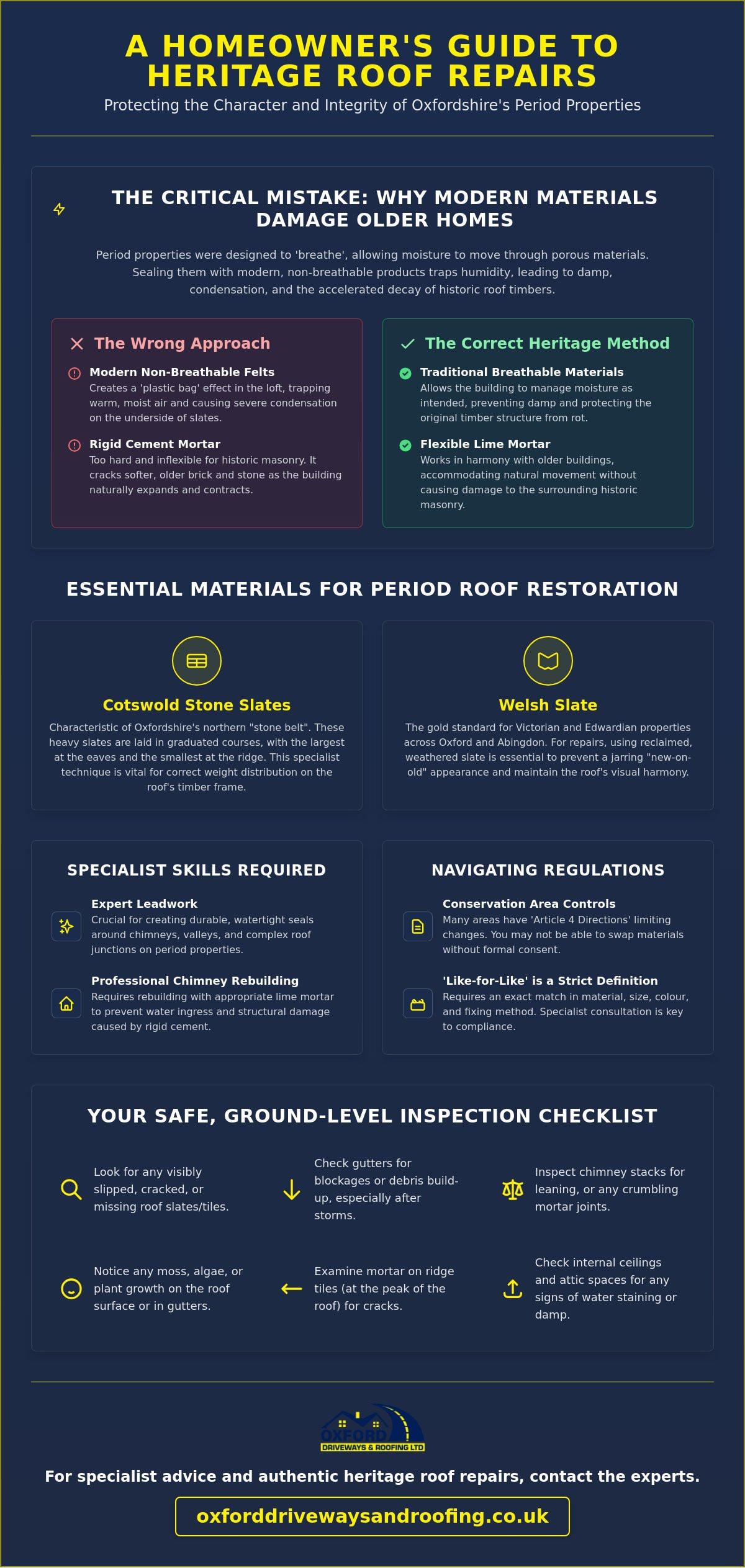
When planning roof repairs for older homes Oxfordshire, the most critical factor to consider is breathability. Older properties were designed to function differently than modern, airtight builds. They rely on the movement of air through porous materials like lime mortar and natural stone to manage moisture. If this natural cycle is interrupted by inappropriate modern interventions, the result is often trapped humidity. This leads to damp patches on internal walls and, more seriously, the accelerated rot of ancient roof timbers. Professional heritage repairs ensure that your home remains weather-tight whilst allowing the building to “breathe” as it was intended to do centuries ago.
Navigating Oxfordshire Conservation Area Regulations
Many period homes in our region are subject to strict planning controls. Oxford City Council and West Oxfordshire District Council frequently apply Article 4 Directions in conservation areas, which limit the changes you can make to your property’s exterior. These regulations often mean that you cannot swap traditional materials for modern alternatives without formal consent. Whilst “like-for-like” repairs generally don’t require full planning permission, the definition of “like-for-like” is narrow. It requires an exact match in material, size, and even the method of fixing. Consulting with a specialist early in the process helps you avoid the legal and financial pitfalls of unauthorized works.
The Risks of Using Modern Materials on Period Roofs
The use of modern, non-breathable felt or high-strength cement mortar can cause irreversible damage to a heritage roof. Modern roofing membranes are often too effective at sealing a roof, which sounds ideal but actually creates a “plastic bag” effect in the loft space. This traps warm, moist air inside, causing condensation to form on the underside of the slates. Furthermore, using hard cement-based mortar for ridge tiles or chimney repairs is a common error. Cement is far too rigid for soft historical masonry. It doesn’t allow for the natural thermal expansion of the building, which inevitably leads to the surrounding stone or brickwork cracking and “spalling” over time.
Investing in authentic restoration is the most reliable way to protect the market value of your property. In sought-after areas like Abingdon and Oxford, savvy buyers look for homes that have been maintained with respect for their history. A roof that has been correctly restored using traditional skills provides long-term structural stability and ensures your home remains a beautiful, functional piece of Oxfordshire’s heritage.
Essential Materials for Period Roof Restoration
Oxfordshire’s rooflines are a mosaic of geological history. To perform successful roof repairs for older homes Oxfordshire, one must first understand the specific material palette of the local area. Sourcing authentic Cotswold stone slates is a primary challenge for homeowners in the northern “stone-belt” villages. These slates are unique because they are laid in graduated courses; the largest, heaviest stones sit at the eaves, while the smallest pieces crown the ridge. This traditional method isn’t just for show; it ensures the weight is distributed safely across the timber rafters.
For the Victorian and Edwardian terraces of Oxford and Abingdon, Welsh slate remains the gold standard. Its durability and clean lines have protected city homes for over a century. When a single slate slips, replacing it with a machine-cut modern equivalent often ruins the visual harmony of the roof. We always recommend using reclaimed, weathered materials for small-scale repairs. This prevents that jarring “new-on-old” look and respects the building’s age. This attention to detail is what defines high-quality roof repairs for older homes Oxfordshire, ensuring that every tile or slate replacement blends seamlessly with the existing structure. Handmade clay plain tiles also play a vital role, especially in southern Oxfordshire. These tiles offer a rich, varied texture and deep colour that simply cannot be replicated by modern mass-produced alternatives.
Cotswold Stone vs. Natural Slate
The choice between stone and slate is often dictated by the original design of the house. Stone slates are significantly heavier than natural slate, requiring much sturdier roof timbers to support the load. Beyond aesthetics, these traditional materials provide excellent thermal properties. They naturally regulate temperature, keeping older homes cooler in summer and retaining heat during the winter months. For a deeper look at how these choices impact your property, you can read our comparison of high quality roofing materials.
Matching Mortar and Ridge Tiles
Getting the materials right extends beyond the slates themselves. It’s vital to use lime-based mortars for re-bedding ridge tiles. As noted in SPAB’s roof maintenance guide, rigid cement mortars often crack when the building naturally settles, whereas lime remains flexible. Identifying the original ridge tile profile is equally important to maintain a consistent roofline. If you are unsure about the specific needs of your property, our team can provide a professional assessment of your new roof installation or repair requirements to ensure a perfect match. This careful approach prevents the “patchwork” look that often plagues poorly executed restorations.
Specialist Leadwork and Chimney Maintenance
Lead remains the superior choice for waterproofing the most vulnerable areas of a period property. In an era of synthetic alternatives, natural lead provides a level of durability and flexibility that modern materials simply cannot match. For effective roof repairs for older homes Oxfordshire, specialist leadwork is essential in valleys, gulleys, and around chimney stacks. Because older roofs often feature complex geometries and irregular angles, the lead must be precisely “bossed” or welded to follow the unique contours of the masonry. This level of craftsmanship ensures a watertight seal that can last for over a century if installed correctly.
Despite its longevity, lead is not immune to the effects of time and weather. Many older homes in Oxford and Abingdon suffer from lead fatigue, which manifests as small, spider-web cracks. This often happens because historical installations used pieces that were too large or were fixed too rigidly, preventing the metal from expanding and contracting with temperature changes. When we assess these structures, we look for signs of thinning or “cockling” where the lead has begun to creep. Replacing these sections with the correct weight of lead, properly partitioned into smaller sheets, is a vital step in maintaining long-term structural stability.
Chimney Rebuilding and Repointing
The chimney stack is often the first part of a heritage roof to show signs of distress. Constant exposure to the elements means that mortar joints can perish, leading to loose brickwork or leaning pots. It is important to distinguish between a stack that merely needs repointing and one that requires structural rebuilding. If the internal flues are damaged or the masonry has “blown” due to frost, a full rebuild using reclaimed bricks and lime mortar is necessary to match the Oxfordshire vernacular. We ensure that lead soakers and flashings are deeply bedded into the new mortar joints, creating a secure interface that prevents water from seeping into the roof timbers below.
Guttering and Drainage for Period Properties
Effective drainage is the silent protector of a heritage facade. For older homes with solid walls, leaking gutters are more than just a nuisance; they are a primary cause of penetrating damp and timber decay. Maintaining cast iron or high-quality aluminium guttering systems is essential for directing water away from the building’s core. Oxfordshire often experiences heavy seasonal rainfall, which can quickly overwhelm poorly positioned downpipes. We focus on ensuring that all guttering is correctly pitched and that downpipes are placed to manage high volumes of water, protecting your home from the ground up. This methodical approach to drainage is a core component of successful roof repairs for older homes Oxfordshire.
Assessing Your Roof: A Homeowner’s Inspection Guide
Identifying the need for roof repairs for older homes Oxfordshire doesn’t always require a ladder. A simple ground-level inspection using a pair of binoculars can reveal a wealth of information about your roof’s health. Focus on the roofline; look for any slates that have slipped from their original position or ridge tiles that appear uneven. In many Oxfordshire villages, you might notice small piles of stone grit or “shale” in your gutters. This is a clear indicator that your Cotswold stone slates are beginning to delaminate. This is a common sign of age that requires professional attention before the winter weather sets in.
Inside the home, your loft space acts as an early warning system. A persistent smell of damp or the presence of dark patches on the rafters usually points to a failing underlay or a cracked tile. On a bright day, turn off the lights in your attic. If you can see points of “daylight” peeking through the roof structure, you have a significant vulnerability. Whilst some older roofs were designed to be draughty for ventilation, visible gaps often mean that wind-driven rain can enter the structure. This leads to the timber decay and damp issues that can compromise the stability of your property. To stay ahead of these issues throughout the year, following a structured seasonal roof maintenance checklist for Oxford homeowners is one of the most effective ways to catch problems early.
The Impact of Oxfordshire Weather on Older Structures
Oxfordshire’s climate presents specific challenges for heritage buildings. Our frequent freeze-thaw cycles are particularly harsh on porous materials like older clay tiles and Cotswold stone. When water enters a hairline crack and freezes, it expands, causing the surface of the tile to “spall” or shatter. Additionally, the high-pitched roofs typical of Oxford’s Edwardian homes act as sails during UK storms. If a single tile is already loose, the wind can easily get underneath and lift an entire section, turning a minor repair into a much larger project.
Budgeting for Heritage Repairs
It’s helpful to remember that heritage work is significantly more labour-intensive than modern roofing. Matching historical slates and using lime-based mortars takes time and precision. Before committing to a project, we recommend a professional survey to determine the exact scope of work. You can consult our new roof cost Oxford guide for a general understanding of the factors that influence pricing. If you’ve spotted any of these warning signs, our team can provide a detailed assessment of your new roof installation or repair needs to ensure your home stays protected.
Why Choose Oxford Driveways And Roofing for Your Heritage Project?
Oxford Driveways And Roofing Ltd. understands that a heritage property is more than just a home; it’s a vital piece of Oxfordshire’s architectural history. We take our role as stewards of these buildings seriously. When managing roof repairs for older homes Oxfordshire, we don’t believe in quick fixes or modern shortcuts that could compromise the building’s integrity. Instead, we offer a disciplined, methodical approach that prioritises the long-term structural stability of your property. Our team combines traditional craftsmanship with a deep understanding of local materials, ensuring every repair respects the unique character of your home.
We use only premium-grade materials, from hand-cut slates to specialist lead, to ensure a seamless aesthetic match. Whether you own a limestone cottage in the Cotswolds or a Victorian terrace in Oxford, our work is designed to stand the test of time. We provide full guarantees on all our heritage roofing projects, giving you the peace of mind that your investment is protected by proven methods and high standards. This focus on stability and longevity is why homeowners across the county trust us to handle their most sensitive restoration projects.
Our Proven Process for Period Properties
Every project begins with a thorough site assessment. We don’t just look at the surface; we investigate the root cause of leaks or structural wear to prevent future failures. Our quoting process is completely transparent. We take the time to explain why specialist materials, such as lime mortar or specific lead grades, are necessary for your home’s breathability and movement. This logical, problem-solution framework ensures you understand every step of the preservation process before work begins.
Execution is handled by a team that understands the nuances of older building behaviours. We work carefully to minimise disruption whilst ensuring that every ridge tile, flashing, and slate is perfectly positioned. This structured approach mirrors the precision of the construction work itself, resulting in a roof that is as beautiful as it is durable. We act as a guide for our customers, simplifying the decision-making process through transparency and a focus on reliability.
Contact Your Local Roofing Specialists Today
Ready to protect your heritage home? Get a professional quote from Oxford Driveways And Roofing Ltd. We proudly serve Oxford, Abingdon, Botley, and the wider Oxfordshire area with expert care. Trust the specialists who treat your home with the respect its history deserves. Whether you require a minor repair or a complex restoration, we provide a safe and guaranteed outcome for every project, ensuring your property remains a proud part of the Oxfordshire landscape for generations.
Securing the Future of Your Oxfordshire Heritage Home
Preserving a period property is a responsibility that requires a balance of traditional craftsmanship and long-term structural foresight. By prioritising authentic materials like Cotswold stone and ensuring the use of breathable lime mortars, you protect the historical integrity of your home whilst preventing the common pitfalls of modern intervention. Whether you are addressing specialist leadwork or structural chimney rebuilding, the key to success lies in choosing methods that respect the original architectural design of the building.
Taking a proactive approach to roof repairs for older homes Oxfordshire ensures that minor maintenance tasks don’t escalate into costly structural failures. As specialists in Oxfordshire period property maintenance, we provide expert leadwork and chimney restoration using fully guaranteed heritage-grade materials. If you’ve identified warning signs during your ground-level inspection, it’s time to seek a professional evaluation. Request a Heritage Roof Assessment from Oxford Driveways And Roofing to ensure your home remains a stable and beautiful landmark for years to come. Your property’s history is worth protecting with precision and care.
Frequently Asked Questions
Do I need planning permission for roof repairs on a listed building in Oxfordshire?
Listed Building Consent is required for any work that alters the character or appearance of a protected structure. While like-for-like repairs using identical materials may not always need formal permission, it’s essential to consult your local conservation officer first. Both Oxford City Council and South Oxfordshire District Council have strict guidelines to ensure historical integrity is maintained; unauthorized works can result in severe legal penalties and enforcement notices.
How do I know if my roof needs a minor repair or a full replacement?
A full replacement is usually necessary if the structural timber is failing or if more than 25% of the roof covering is damaged. For roof repairs for older homes Oxfordshire, minor issues like a few slipped slates can often be fixed individually to restore a watertight seal. However, if you notice widespread “shaling” of stone slates or significant internal damp, a comprehensive overhaul may be the most stable, long-term solution.
Can I use modern reclaimed tiles on an older property?
Using reclaimed materials is often the best way to achieve a seamless repair that respects the building’s history. Reclaimed Cotswold stone or weathered Welsh slate will match the existing roof’s texture and colour much better than brand-new, machine-made alternatives. It’s vital to ensure these materials are sourced from reputable suppliers to guarantee they are frost-hardy and structurally sound before they are installed on your heritage structure.
What is the most durable roofing material for a period home in Oxford?
Natural Welsh slate is widely considered the most durable material for period homes, with a lifespan that can often exceed a century. High-quality handmade clay tiles are also exceptionally long-lasting and develop a beautiful patina as they age. These traditional materials are chosen for their proven ability to withstand the UK’s weather fluctuations whilst providing a level of protection that modern synthetic options often struggle to match.
How often should I have the roof of my older home inspected?
We recommend a professional visual inspection at least twice a year, ideally in autumn and spring. This allows you to clear gutters and identify any damage caused by winter frosts or summer heat before leaks occur. Regular roof maintenance for Oxford homeowners is the most effective way to manage roof repairs for older homes Oxfordshire, as it prevents minor issues from developing into costly structural failures that require extensive and expensive intervention.
Why is lime mortar used for chimney repairs on heritage properties?
Lime mortar is used because it is softer and more porous than modern cement, allowing the building to breathe and move naturally. Heritage bricks and stones are often quite soft; if a rigid cement mortar is used, it can cause the masonry to crack or “spall” during natural thermal expansion. Lime mortar acts as a flexible, sacrificial element, protecting the more valuable historical masonry from irreversible damage over time.
How much do heritage roof repairs typically cost compared to modern ones?
Heritage repairs are typically more labour-intensive than modern roofing projects, which is reflected in the overall investment required. The requirement for hand-laid materials, specialist lead welding, and traditional lime-pointing demands a higher level of craftsmanship and significantly more time on-site. Whilst the initial outlay may be higher, the use of premium, authentic materials ensures a much longer lifespan and maintains the historical market value of your property.