Your driveway should be a point of pride, not a weekend chore list involving kneeling pads and chemical weedkillers. Many Oxford residents find that traditional surfaces quickly succumb to the region’s heavy clay soil, leading to unsightly sinking or persistent puddling after a typical British downpour. If you’re tired of moss creeping across shaded areas or the endless task of pulling weeds from between paving stones, you’re certainly not alone. Finding the best low maintenance driveways Oxford homeowners can rely on is about more than just aesthetics; it’s about choosing a surface designed to outsmart the local environment.
We understand that property maintenance can feel overwhelming when the ground beneath your feet is working against you. This guide identifies the most durable, weed-resistant, and stylish surfaces that thrive in Oxfordshire’s unique conditions with minimal effort on your part. You’ll discover how the right material can provide a pristine front garden with zero weeds whilst significantly improving your property’s kerb appeal and value. We’ll walk through the best options for 2026, focusing on permeability and stability to ensure your home remains accessible and attractive for years to come.
Key Takeaways
- Learn why modern resin-bound and SMA tarmac are the leading options for homeowners seeking low maintenance driveways Oxford, offering superior weed resistance and long-term durability.
- Understand the impact of “Oxford Clay” on your property and why professional drainage solutions are essential to prevent sinking and surface water issues in the Thames Valley.
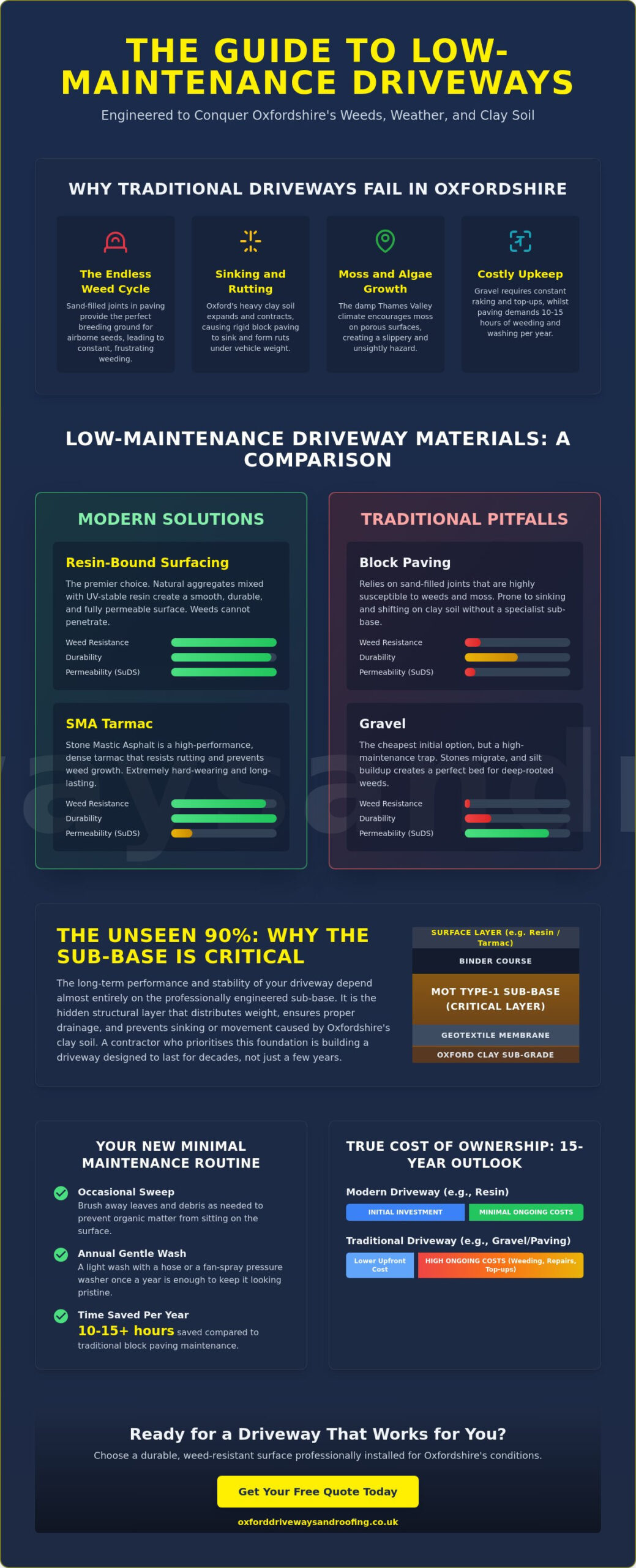
- Discover why the integrity of a driveway depends 90% on the hidden sub-base and how to verify that your chosen contractor prioritises this critical structural layer.
- Master simple, seasonal care routines that prevent moss and algae growth, ensuring your surface remains pristine with only a few minutes of attention each month.
- Evaluate the true cost of ownership by comparing the long-term savings of durable, professional installations against the frequent repair costs associated with cheaper, traditional materials.
Why Traditional Driveways Fail: The High Cost of Maintenance in Oxfordshire
In the world of modern UK property care, “low maintenance” is a technical standard rather than just a marketing phrase. When we discuss low maintenance driveways Oxford homeowners should consider, we are referring to surfaces engineered to withstand local environmental stressors with minimal intervention. Many traditional installations fail because they weren’t designed to handle the specific geographical challenges found across Oxfordshire. A surface that looks pristine in a showroom can quickly become a liability when faced with the heavy clay and high humidity levels characteristic of our region.
Gravel is a frequent offender in this regard. Whilst it’s often the most affordable option upfront, it acts as a high-maintenance trap for the unwary. Stones inevitably migrate onto the public footpath, requiring constant raking. Over time, silt accumulates at the base of the gravel, providing a nutrient-rich environment for weeds to flourish. When you account for the cost of regular stone top-ups and weed treatments, the long-term price of “cheap” gravel often exceeds that of more durable common driveway materials like resin or professional tarmacadam.
Oxford’s notorious clay-heavy soil adds another layer of complexity. Clay expands and contracts significantly based on moisture levels, which exerts immense pressure on rigid driveway structures. This often results in the “sinkage” seen in older block paving installations, where heavy vehicles create permanent ruts in the surface. Without a correctly engineered sub-base and a flexible or reinforced surface, your driveway is essentially at the mercy of the ground’s natural movement.
The “Weed Cycle” and How to Break It
Standard paving relies on kiln-dried sand to fill the joints. Unfortunately, this sand is the perfect host for airborne seeds. Once a weed takes root, it’s incredibly difficult to remove entirely; DIY weed killers often only scorch the leaves while the root system remains protected deep within the joint. Breaking this cycle requires a shift in materials. The use of non-porous jointing compounds or seamless resin surfaces acts as a primary physical barrier that prevents root systems from ever taking hold.
Oxford’s Damp Climate: A Breeding Ground for Moss
Oxford’s proximity to the Thames Valley means we experience high humidity levels, particularly in shaded suburbs. North-facing driveways are especially prone to moss and algae growth because traditional concrete and porous stones retain moisture for long periods. This isn’t just an aesthetic issue; green staining can become incredibly slippery when wet. Moisture trapped within these porous materials expands during winter frosts, leading to cracks and surface “spalling” that compromises the driveway’s structural integrity over time.
Comparing the Top Low Maintenance Driveway Materials for 2026
Selecting the right material is the first step toward reclaiming your weekends from property chores. For those seeking low maintenance driveways Oxford residents can depend on, the market in 2026 offers several high-performance solutions that far surpass traditional gravel or basic paving. The primary goal is to install a surface that resists environmental pressures while requiring minimal physical upkeep. Whilst traditional block paving might require 10 to 15 hours of weeding and pressure washing annually, modern engineered surfaces can reduce this commitment to less than two hours of light maintenance per year.
Resin-bound surfacing remains the premier choice for both durability and aesthetics. This system involves mixing natural aggregates with a clear, UV-stable resin before laying, creating a smooth and completely permeable finish. Because the surface is porous, it aligns perfectly with UK government guidance on permeable driveways. This SuDS (Sustainable Drainage Systems) compliance is vital in the Thames Valley, as it allows heavy rain to drain naturally into the ground rather than overwhelming local drainage networks or creating puddles on your property.
Resin-Bound vs. Resin-Bonded: Understanding the Difference
It’s essential to distinguish between the “mixed” resin-bound method and the “scatter” resin-bonded method. Resin-bound is a superior mixed system where every stone is coated, resulting in a solid, porous surface that stays intact. In contrast, resin-bonded systems involve scattering loose stones over a layer of resin “glue.” These stones inevitably come loose over time, leading to bald patches and stone migration that defeats the purpose of a low-maintenance installation. For long-term peace of mind, the bound method is the only reliable option. Before committing to an installer, it is worth reviewing a detailed breakdown of resin driveway cost per m2 for 2026 Oxford installations to ensure you are budgeting accurately for a quality specification.
Modern Tarmac and Asphalt Solutions
Modern tarmac surfacing, specifically Stone Mastic Asphalt (SMA), has evolved significantly from the brittle surfaces of previous decades. SMA formulations now include added fibres and advanced polymers that provide a higher degree of flexibility. This is particularly beneficial for low maintenance driveways Oxford homeowners install on clay-heavy ground, as the material can accommodate minor soil movements without cracking. The seamless nature of SMA means there are no joints for weeds to inhabit, and the surface is now highly resistant to tyre marks and oil spills. If you are looking for a reliable, cost-effective update, a professional tarmac installation remains a steady and durable choice.
For those seeking a more decorative finish without the maintenance of individual stones, porcelain paving and imprinted concrete are excellent alternatives. Porcelain is almost entirely non-porous, making it naturally resistant to the moss and algae growth that plagues many Oxford suburbs. Imprinted concrete offers a seamless, reinforced slab that can be styled to look like traditional stone, providing the aesthetic of cobbles without the vulnerability of sand-filled joints. For a comprehensive side-by-side evaluation of how these options compare on longevity and weather resistance, our guide to durable driveway materials for UK homeowners in 2026 provides an in-depth breakdown of each surface type.
Oxford’s Climate and Soil: Why “Low Maintenance” Depends on Your Postcode
Residents in areas such as Headington, Cowley, or Summertown often face vastly different maintenance challenges based purely on the ground beneath their homes. Achieving low maintenance driveways Oxford homeowners can trust requires a deep understanding of the local “Oxford Clay.” This heavy soil is notorious for its poor drainage and significant volume changes throughout the seasons. Without accounting for these local geological factors, even the most expensive surface will eventually fail, leading to the very maintenance headaches you are trying to avoid.
Oxford’s proximity to the Thames and Cherwell rivers also creates a unique microclimate. Higher humidity levels in these river-adjacent suburbs mean that surfaces stay damp for longer periods. This moisture retention is exactly what allows moss and algae to thrive, particularly on north-facing properties. Furthermore, many of Oxford’s more established neighbourhoods are characterised by mature oak and beech trees. Whilst these add significant kerb appeal, they drop leaves that release tannins. On porous, traditional surfaces, these tannins leave stubborn brown stains that require aggressive chemical cleaning to remove.
The Geological Challenge of Oxfordshire
Clay soil acts like a sponge; it expands significantly during wet winters and shrinks during dry summers. This constant movement exerts immense pressure on driveway foundations. If your driveway is built on a rigid, brittle base, this movement inevitably leads to surface cracking and “heaving.” A flexible, professionally installed sub-base is actually more critical for long-term durability than the top layer itself. The high water table found throughout the Thames Valley means that any driveway without a properly engineered drainage layer will eventually suffer from structural instability and surface degradation.
SuDS Compliance and Local Regulations
Managing surface water is a priority for Oxford City Council to prevent local flooding. When transforming a front garden, you must consider how rainwater will be handled. Following the government guidance on permeable driveways ensures that your new installation manages runoff on-site. By choosing a SuDS-compliant material like resin-bound surfacing, you allow water to filter naturally into the ground. This approach not only prevents “puddle-pooling” during heavy autumn storms but also typically removes the requirement for formal planning permission. Selecting the right material for your specific low maintenance driveways Oxford project ensures your home remains compliant whilst staying puddle-free and pristine year-round.
Practical Tips to Minimise Driveway Upkeep Throughout the Year
Investing in low maintenance driveways Oxford homeowners recommend is only half the battle; the other half is implementing a simple, proactive care routine. We often tell our clients that five minutes of attention once a month is worth five hours of back-breaking scrubbing later in the year. Even the most durable surfaces benefit from a “little and often” approach to keep them looking as good as the day they were installed. By staying ahead of local environmental factors, you can ensure your driveway remains a stress-free part of your property.
There’s a common misconception that a high-pressure washer is the best tool for a clean driveway. In reality, aggressive pressure can be a surface’s worst enemy. For resin-bound surfaces, excessive force can occasionally dislodge the aggregate. For tarmac, it can strip away the essential oils that keep the material flexible and resilient against the Oxford clay movement. A simple garden hose and a soft-bristle brush are usually all you need to maintain a pristine finish without compromising the structural integrity of the installation.
Your Seasonal Maintenance Calendar
Spring is the time to deal with tree pollen and early weed spores. A quick sweep prevents these organic materials from settling into any tiny crevices. During autumn, Oxford’s mature trees drop significant amounts of foliage. Clearing these leaves promptly is vital to prevent organic tannins from staining the surface, particularly on lighter-coloured resin or stone finishes. In winter, avoid using heavy rock salt on decorative surfaces. Instead, use white de-icing salt sparingly; it leaves less residue and is far gentler on the finish during freeze-thaw cycles.
Beyond surface cleaning, ensuring that your property’s drainage systems remain clear of silt and organic matter is vital for long-term stability. For those looking for detailed maintenance steps, raylawns.com provides a useful guide on how to clean and maintain French drains to prevent water build-up.
Spot Cleaning and Stain Removal
Treating oil leaks promptly is essential for both resin and tarmac. Use a highly absorbent cloth to soak up the spill immediately, then wash the area with warm, soapy water. Avoid solvent-based cleaners at all costs, as they can dissolve the bitumen in tarmac or cloud the clear resin finish. For stubborn tyre marks, a mild household detergent and a stiff brush will often do the trick. If your current surface has reached a point where simple cleaning is no longer effective, it might be time to consider a professional upgrade. Our team can help you transition to a more manageable solution through expert Resin Bound Driveways installation.
Using safe cleaning agents is just as important as the method itself. Harsh chemicals can discolour surfaces and may even harm the surrounding landscaping. A simple solution of washing-up liquid and warm water is often the most effective and safest way to handle general grime. This gentle approach protects the protective sealants used in modern driveway engineering, ensuring your front garden remains the envy of the neighbourhood with minimal physical effort.
Selecting the Right Specialist for Your Oxford Driveway Project
Choosing a contractor for low maintenance driveways Oxford residents can trust is a decision that impacts your property for decades. It’s easy to be swayed by a quick turnaround or a low initial estimate, but true longevity is built beneath the surface. We believe that the sub-base represents 90% of a driveway’s success. Without a deep, reinforced foundation that accounts for the local geology we discussed earlier, even the most expensive resin or tarmac will eventually fail. A specialist who rushes the groundwork is essentially building on a foundation of future repairs.
When you interview potential installers, focus on their technical approach rather than just the aesthetics of their portfolio. Ask specific questions about the depth of excavation and the type of sub-base material they intend to use. A professional should be able to explain how they will manage the Oxford clay on your specific site. Guarantees are another vital consideration. A “10-year warranty” should actually cover structural integrity and sinking, not just surface fading. Ensure these terms are provided in writing to give you the peace of mind that your investment is fully protected. Understanding the typical resin driveway cost per m2 in the UK for 2026 will also help you identify quotes that are unrealistically low and may indicate corners being cut on materials or groundwork.
Vetting Your Contractor
Checking for professional groundwork accreditations and comprehensive public liability insurance is a non-negotiable first step. Look for local examples of work that are at least five years old; this is the true test of whether an installer’s methods can withstand Oxfordshire’s climate. Be wary of “cowboy” installers who offer significant discounts for using leftover materials from a nearby job. These operators often skip the vital drainage and stabilisation steps, leading to a driveway that may look good for a few months but fails after its first winter frost.
The Oxford Driveways And Roofing Difference
At Oxford Driveways And Roofing Ltd., we prioritise structural integrity over surface speed. Our methodical approach to site preparation ensures that every Resin Bound Driveways Oxford project we undertake is built to last. We act as a steady guide for our customers, simplifying the technical decisions and providing transparency at every stage of the build. We don’t cut corners on excavation because we know that a stable sub-base is the only way to prevent the sinking and cracking common in our region.
Our team relies on proven methods and high standards to deliver results that improve your property value whilst removing the stress of ongoing maintenance. We take the time to ensure your drainage is SuDS compliant and your foundations are rock-solid. If you are ready to transform your front garden into a pristine, weed-free space, you can request a bespoke quote for your Block Paving Specialists Oxford project today. We are here to provide a reliable, expert service that ensures your new driveway remains a point of pride for years to come.
Secure Your Property’s Future with a Low-Maintenance Surface
Achieving a pristine front garden doesn’t have to be a source of constant stress. By selecting materials engineered for our local geography and prioritising a robust sub-base, you can effectively eliminate the “weed cycle” and prevent the sinkage common on Oxfordshire clay. Whether you opt for the seamless finish of SMA tarmac or the modern elegance of resin, the goal is always a surface that works with the environment rather than against it. Investing in low maintenance driveways Oxford homeowners can rely on ensures your property remains attractive and accessible without the need for intensive weekend labour.
At Oxford Driveways And Roofing Ltd., we use premium-grade materials specifically suited for Oxfordshire soil to provide long-term stability. Our specialists in SuDS-compliant resin and block paving offer fully guaranteed workmanship to give you complete peace of mind. We invite you to get a free, no-obligation quote for your low maintenance driveway in Oxford today. Take the first step toward a beautiful, durable entrance that you’ll be proud of for years to come.
Frequently Asked Questions
What is the most low maintenance driveway surface available in Oxford?
Resin-bound surfacing is the gold standard for low maintenance driveways Oxford residents select for long-term ease. Its seamless finish naturally prevents weed growth and eliminates the common issue of loose stones migrating across your property. Modern SMA tarmac is another excellent option for those seeking a durable, easy-to-clean surface that accommodates the natural soil shifts found in our local clay-heavy ground.
Does a low maintenance driveway cost more to install?
High-performance materials like resin or premium block paving typically require a larger initial investment than traditional gravel. This is because these systems demand more intensive site preparation and the use of advanced, UV-stable materials. However, the long-term savings on repairs, weed treatments, and professional cleaning usually offset the upfront cost over the driveway’s lifespan, providing better value for money.
How do I prevent weeds from growing in my new driveway?
The most effective way to prevent weeds is to choose a surface without open joints, such as resin-bound aggregate or SMA tarmac. These materials remove the sand-filled gaps where airborne seeds typically settle and germinate. Regular sweeping to remove organic debris like leaves and soil ensures that seeds cannot find a nutrient-rich environment to take root on the surface finish.
Do I need planning permission for a new driveway in Oxford?
Planning permission is generally not required if your new surface is permeable and allows water to drain naturally into the ground. This is why SuDS-compliant materials like resin-bound aggregate are so popular for front gardens across the Thames Valley. If your chosen material is non-porous, you must obtain planning permission unless you install a drainage system that directs water to a soakaway within your property.
Can I salt a resin-bound driveway during an Oxford winter?
You can safely use white de-icing salt on a resin-bound surface, but you should avoid using heavy rock salt. White salt leaves less residue and is far gentler on the clear resin finish during the freeze-thaw cycles common in the Oxford area. We recommend washing away any salt residue in the spring with a simple garden hose to maintain the surface’s original appearance.
How long will a low maintenance resin driveway actually last?
A professionally installed resin-bound driveway can last up to 25 years when built on a correctly engineered sub-base. The UV-stable resins used in modern installations prevent the surface from becoming brittle or discoloured as it ages. Proper site management is essential to ensure the installation can handle the natural movement and drainage challenges associated with the local Oxfordshire geography.
Is tarmac or resin easier to keep clean?
Both surfaces are relatively easy to maintain, but resin is generally easier to keep clean because of its smooth, non-porous aggregate finish. SMA tarmac is also highly practical as it resists oil spills and tyre marks more effectively than older asphalt formulations. A simple wash with soapy water once or twice a year is usually sufficient to keep both materials looking pristine.
Can I install a low maintenance surface over my existing driveway?
Overlaying an existing driveway is sometimes possible if the current base is stable and free from significant damage. In many parts of Oxford, however, the heavy clay soil makes this a risky approach for low maintenance driveways Oxford homeowners expect to last. We often recommend a full excavation to install a reinforced, flexible sub-base that ensures your new surface remains level despite the ground’s natural movement.