
Waiting for a damp patch to appear on your bedroom ceiling is the most expensive way to manage your property. For many Oxford homeowners, the fear of a sudden, costly leak during a winter storm is a constant source of anxiety, especially when it’s difficult to distinguish between simple ageing and structural damage. We understand that your home is your most significant investment, and the uncertainty of finding a reliable specialist only adds to the pressure of keeping it weather-tight. Routine roof maintenance shouldn’t be a source of stress; it should be your primary tool for long-term peace of mind.
In this guide, you’ll discover how to protect your home from expensive repairs with our comprehensive, season-by-season approach to professional roof maintenance. We’ve designed a clear plan that helps you identify what you can monitor yourself and highlights the critical moments when expert intervention is mandatory. By following these structured steps, you can confidently extend the lifespan of your roofing system and ensure your home remains a safe, dry sanctuary regardless of what the Oxfordshire weather brings.
Key Takeaways
- Understand why the damp Oxfordshire climate demands a proactive inspection schedule to protect your home’s structural integrity.
- Learn how to conduct safe, ground-level visual checks and internal loft inspections to identify potential issues early.
- Discover how a consistent roof maintenance routine helps you spot subtle signs of damage, such as daylight in the loft, before they lead to costly leaks.
- Recognise the unique care requirements of different property types, including the specific challenges of maintaining traditional slate and modern flat roof systems.
- Gain clarity on when a simple visual check isn’t enough and professional expertise is required to ensure a reliable, long-term outcome.
The Critical Importance of Regular Roof Maintenance in Oxford
Professional roof maintenance is far more than a reactive response to a visible leak; it is a disciplined, proactive programme of inspections and minor corrective repairs. By identifying small vulnerabilities before they escalate, homeowners can ensure their property remains a secure and dry environment. This methodical approach is particularly vital in Oxfordshire, where the local climate presents unique challenges. Our region often experiences damp, lingering winters and significant temperature fluctuations that can put immense strain on traditional building materials. When moisture enters a small fissure and then freezes, the resulting expansion can shatter tiles or degrade mortar, making constant vigilance a necessity for any responsible property owner.
The financial logic behind regular upkeep is undeniable. Whilst a full replacement is a significant undertaking, small interventions such as replacing a slipped slate or clearing debris from a valley are relatively modest investments that prevent structural failure. Beyond the immediate costs, a healthy roof is intrinsically linked to the overall structural integrity of your home. A solid understanding roof construction reveals that the roof provides the essential tension and protection required to keep walls stable and foundations dry. Without this protection, the entire building remains vulnerable to the elements. It’s a strategic investment that pays dividends in longevity.
Preserving Your Home’s Kerb Appeal and Value
A property’s exterior serves as its primary calling card. A roof covered in thick moss or showing signs of neglected repair can significantly devalue a home during a valuation or survey. Potential buyers often view a poorly maintained roof as a sign of hidden internal issues, leading to lower offers or complicated negotiations. Conversely, keeping a detailed log of professional roof maintenance provides immense peace of mind. It acts as a certified history of care, proving to future owners that the property has been protected by a specialist. This transparency often makes a home much easier to sell in the competitive Oxford market.
The “First Line of Defence” Against Damp
Your roof acts as the primary shield for your home, preventing water from reaching the delicate timber frame and internal ceilings. If this barrier fails, the result is often a slow, destructive ingress of moisture that rots wood and ruins plasterwork. Roof maintenance is the primary method for avoiding internal damp and mould growth by ensuring the external envelope remains completely sealed. Maintaining this standard also protects the value of any previous structural work you may have commissioned. If you are currently weighing up the new roof cost Oxford homeowners typically face, remember that consistent care is the most effective way to ensure that investment lasts for decades rather than years.
The Essential Homeowner’s Roof Maintenance Checklist
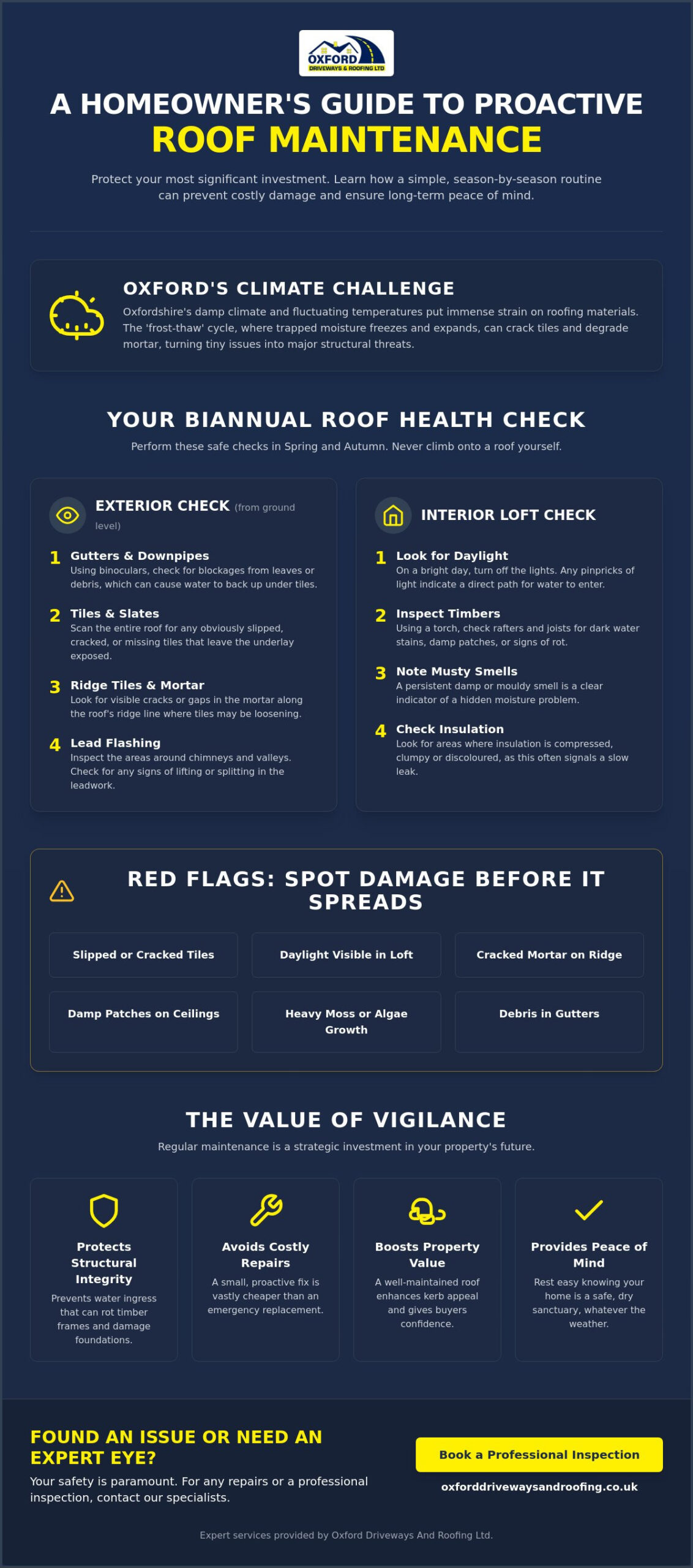
Maintaining a property in Oxford requires a structured approach to prevent the elements from causing lasting harm. We recommend a two-part roof maintenance strategy: a detailed external visual inspection from ground level and a thorough internal loft check. Safety is our absolute priority; you should never attempt to climb onto a roof yourself without specialist training and safety harnesses. Instead, you can effectively monitor your home’s health using simple tools like a pair of high-powered binoculars for the exterior and a bright torch for the attic. Following these homeowner roof maintenance tips twice a year, typically in the Spring and Autumn, is the industry gold standard for ensuring long-term durability.
Autumn Preparation: Readying for Winter Storms
As the leaves fall, your primary focus should be your drainage system. Clearing gutters and downpipes of organic debris prevents water from backing up under the tiles or creating heavy ice dams during cold snaps. Whilst you’re checking the perimeter, use your binoculars to inspect the ridge tiles. Look for cracks in the mortar bedding; these small gaps are easily exploited by frost-thaw cycles, where water enters, freezes, and expands, eventually loosening the tile. If you notice any lifting or splits in the lead flashing around chimneys or valleys, it’s a sign that the seal is failing and requires professional attention to keep your guttering and downpipes in peak condition.
Spring Assessment: Evaluating Winter Wear and Tear
Once the harsh winter weather subsides, it’s time to evaluate the impact of the season’s storms. Start by checking your gutters again, but this time look for fragments of tile or sediment. Finding a significant amount of this grit suggests the protective surface of your roofing material is degrading. High winds amongst the winter months often result in slipped slates or broken tiles, which are easily spotted from the garden. You should also look for biological growth like moss or lichen. These organisms act like sponges, retaining moisture against the tile surface and increasing the risk of rot. Identifying these issues early allows for minor repairs that prevent a total system failure, ensuring your roof maintenance efforts are effective.
Spotting the Subtle Signs of Roof Damage Before Leaks Occur
Identifying the early indicators of failure is the most effective way to manage your roof maintenance costs. Whilst a ceiling drip is an obvious crisis, the most damaging issues often begin as “invisible” failures within the roof structure itself. We recommend conducting these checks during a bright day to maximise visibility. One of the most telling signs of a compromised system is seeing daylight peeking through the roof felt or sarking. If light can find a way in, water is likely following the same path during heavy rainfall, even if it hasn’t yet reached your living space.
Standard protocols for professional roof maintenance standards require a close look at the timber components for evidence of moisture. Damp timber often presents as dark, concentrated stains or soft spots that give way under light pressure. You might also notice a persistent musty odour in the loft space, which suggests that moisture is being trapped without adequate ventilation. These subtle warnings are your opportunity to intervene before the structural integrity of the home is compromised.
Internal Warning Signs in the Attic
Distinguishing between condensation and active leaks is crucial for an accurate assessment. Condensation often appears as a light misting or uniform dampness across the underside of the roof, whereas a leak creates specific, localised tracks of water. Check your insulation regularly; if it feels damp or heavy, it may be hiding structural rot in the joists below. Water stains on rafters often indicate a problem far higher up the roof slope, as moisture travels along the timber before eventually dripping onto the ceiling or floor below.
External Red Flags to Monitor
Observations from the ground should focus on the roof’s overall symmetry and the condition of the materials. A sagging roofline or uneven tile rows suggest that the underlying structure may be weakening or that the battening has failed. Pay close attention to older materials that show signs of “cupping” or “curling” at the edges, as this indicates they are losing their weather-resistant properties and are reaching the end of their functional lifespan.
Debris found on the driveway or patio is a significant warning sign that shouldn’t be ignored. Finding bits of mortar often points to ridge tile failure, where the bedding has perished and left the crest of your roof vulnerable to high winds. Similarly, chimney stack maintenance is vital for preventing water ingress into the centre of the house. If the mortar around the stack is crumbling, water can seep into the brickwork and travel down the chimney breast, causing extensive internal damp that is difficult and expensive to remediate.
Tailoring Maintenance to Your Property Type: From Flat Roofs to Heritage Homes
Oxford presents a unique architectural landscape, blending modern developments with centuries-old historic structures. This diversity means a standard approach to roof maintenance is rarely sufficient. Modern pitched roofs often utilise high quality roofing materials such as natural slate or clay tiles, which require specific handling to avoid accidental damage. In contrast, flat roof systems rely on seamless membranes that face entirely different environmental pressures, such as UV degradation and standing water. Understanding the specific requirements of your property is the first step toward a successful long-term strategy.
Flat Roof Waterproofing and Care
Flat systems are designed to shed water efficiently, but they are highly sensitive to drainage issues. If outlets become blocked, “ponding” occurs. This standing water puts immense weight stress on the roof structure and accelerates the failure of the waterproof membrane. You should also look for “alligatoring,” which is a pattern of small cracks in bitumen or felt surfaces resembling reptile skin. This is a clear indicator that the material is becoming brittle and is reaching the end of its life. If your system is showing these signs, it may be time to consult our guide on flat roof installation Oxfordshire to explore modern, more durable alternatives.
Heritage and Period Property Considerations
For those living in Oxford’s historic conservation areas, roof maintenance involves a deep respect for traditional craftsmanship. Period properties often feature lime mortar and hand-cut slates that allow the building to breathe and shift naturally. Using modern cement for quick fixes is a common mistake that causes irreversible damage. The rigid nature of cement traps moisture and causes the surrounding historic masonry to crumble over time. Preservation requires specialist knowledge in managing leadwork welding and traditional heritage roof repairs. Older chimneys require careful monitoring; chimney rebuilding using traditional methods is often necessary to maintain both the aesthetic and structural integrity of the home.
If you’re concerned about the specific needs of your property, you can book a specialist survey with Oxford Driveways And Roofing Ltd. to ensure your home remains protected for the long term.
Professional Roof Inspections: When to Call the Specialists
Whilst a diligent homeowner’s visual checklist is an invaluable first line of defence, it cannot replace the technical depth of a professional roofing survey. A specialist inspection involves a comprehensive physical assessment that goes far beyond what can be seen through binoculars from the pavement. Experts use advanced diagnostic tools and access equipment to evaluate the structural integrity of the timber, the condition of the underlay, and the security of every individual fixing. This level of roof maintenance is essential for identifying microscopic fractures in tiles or failing seals around complex joins that are invisible to the untrained eye.
Engaging a professional also provides a vital paper trail for your property records. Having a detailed, written report of your roof maintenance is often a requirement for building insurance providers, particularly when processing a claim after a period of extreme weather. It demonstrates that you have taken all reasonable steps to preserve the property, shifting the narrative from negligence to proactive care. This documentation is also a powerful asset for long-term financial planning, as it allows you to anticipate and budget for major works years before they become emergencies.
Post-Storm Emergency Assessments
High-risk scenarios demand immediate professional intervention to prevent secondary damage to your home’s interior. If you discover even a single tile or fragment of mortar on your lawn after a gale, the protective envelope of your roof has been breached. Immediate action is required because a missing tile leaves the felt vulnerable to wind-driven rain, which can saturate insulation in hours. For a comprehensive understanding of how to respond after severe weather, our guide to storm damage roof repair walks you through every step of the recovery process, from initial assessment to insurance documentation. You must also be wary of “hidden” storm damage known as wind lift. This occurs when powerful gusts create a vacuum effect that loosens fixings without actually removing the tiles; whilst the roof looks intact, its structural resilience is compromised. A specialist will also ensure your guttering and downpipes remain securely fastened, as high winds can often pull brackets away from the fascia.
Choosing a Trusted Local Specialist
Oxford’s unique mix of architectural styles means you need a contractor who understands local building regulations and the specific requirements of the Oxford City Council. Hiring a local specialist ensures that any repairs or replacements are compliant with the latest safety standards and sympathetic to the surrounding neighbourhood. When investing in your home, choosing a firm that provides guaranteed work is essential for your peace of mind. It ensures that the craftsmanship is built to last and that you have a reliable point of contact should you require further assistance. At Oxford Driveways And Roofing Ltd, we pride ourselves on being the steady, reliable experts that homeowners trust to protect their most significant investment.
Don’t leave the safety of your home to chance. Contact Oxford Driveways And Roofing for a professional roof assessment today and ensure your property is ready for whatever the seasons bring.
Securing the Future of Your Oxford Home
Protecting your property from the unpredictable Oxfordshire weather requires a shift from reactive repairs to a structured, seasonal strategy. By combining your own bi-annual visual checks with timely professional interventions, you can significantly extend the lifespan of your roofing system. Whether you are managing a contemporary flat roof or a delicate heritage property, understanding the unique stressors of your architecture is the key to preventing “invisible” failures from becoming expensive structural issues. Proactive roof maintenance is not just a task; it is the most effective safeguard for your home’s long-term value and structural safety.
At Oxford Driveways And Roofing Ltd, we provide the steady expertise needed to keep your home weather-tight. Our team specialises in both modern flat roofs and heritage Oxfordshire properties, using only premium-grade materials to ensure every repair stands the test of time. We take the uncertainty out of property care with fully guaranteed roofing and repair work that prioritises your peace of mind. Take the first step toward a worry-free winter by securing your home today. Book Your 2026 Professional Roof Inspection with Oxford Driveways And Roofing to enjoy the confidence that comes with expert protection.
Frequently Asked Questions
How often should I carry out roof maintenance?
You should carry out a formal inspection twice a year, ideally during the Spring and Autumn months. This schedule allows you to identify damage caused by winter storms and prepare the structure for the upcoming cold season. Regularity is the key to preventing minor issues from developing into structural failures, and it’s much easier to spot a slipped slate before it leads to a significant internal leak.
Can I perform roof maintenance checks myself?
You can safely perform visual checks from ground level using binoculars and conduct internal inspections within your loft space using a bright torch. However, you should never attempt to climb onto the roof surface yourself without professional safety equipment and training. Leave the high-level physical assessments to a qualified specialist to avoid personal injury or accidental damage to your tiles or flat roof membrane.
What are the most common roof problems in Oxford?
The most frequent issues in Oxfordshire include slipped slates on heritage properties, heavy moss accumulation, and perished mortar on ridge tiles or chimney stacks. Our local climate often causes frost-thaw damage, where moisture enters small cracks and expands during a freeze. Blocked guttering is also a persistent problem that leads to water backing up under the roofline and causing dampness in the timber frame.
How much does professional roof maintenance typically cost?
The cost of professional roof maintenance varies based on the size of your property and the complexity of the roofing system involved. Whilst minor tasks like clearing debris are relatively modest, a comprehensive structural survey or leadwork repair will require a higher investment. Investing in a professional assessment is generally much more cost-effective than paying for a full emergency replacement that results from years of neglect.
Is moss on my roof a serious problem?
Moss growth is a serious concern because it acts like a sponge, retaining moisture against the surface of your tiles for long periods. This constant dampness can lead to the rot of the underlying wooden battens and increase the risk of frost damage during the winter months. If you leave it untreated, the weight of the moss and the moisture it holds can eventually compromise the structural integrity of the entire roof.
What should I do if I find a leak during a storm?
If you discover a leak during a storm, your first priority is to contain the water internally using buckets to protect your ceilings and flooring. Don’t attempt to go onto the roof during active weather or high winds as it’s extremely dangerous for an untrained individual. Once the storm has subsided, you should contact a professional roofer to conduct an emergency assessment and secure the breach before further rain occurs. Our detailed guide on storm damage roof repair can help you navigate the next steps, including how to document the damage for your insurance provider.
Does home insurance cover general roof maintenance?
Standard home insurance policies typically don’t cover general roof maintenance or repairs caused by gradual wear and tear. Insurance is designed to protect against sudden, accidental damage, such as a tree falling during a gale or a severe storm event. Most providers expect homeowners to keep their property in good repair, and failing to do so could even invalidate a future claim if the damage is deemed preventable.
What is the difference between a roof repair and roof maintenance?
Roof maintenance is a proactive, scheduled programme of inspections and minor corrective actions designed to prevent failure before it happens. In contrast, a roof repair is a reactive response to a specific problem that has already occurred, such as a visible leak or a broken tile. Consistent maintenance is the most effective way to reduce the frequency and cost of major repairs over the property’s functional lifespan.