
Did you know that UK insurers paid out a record £244 million for residential storm damage in 2025, a staggering 32% increase from the previous year? When a severe weather event hits Oxfordshire, the immediate aftermath often feels overwhelming. You might find yourself staring at the ceiling, fearing the first signs of a leak, or worrying about how to navigate the complexities of an insurance claim during a period of peak demand. It’s a stressful position for any homeowner, but taking the right steps early can prevent a minor issue from becoming a structural failure.
We understand that your priority is a safe and dry home for your family. This guide provides a clear, step-by-step framework for managing storm damage roof repair with confidence. You’ll learn how to safely assess your property’s condition, gather the precise documentation required by modern insurers, and coordinate with professional specialists to ensure a durable, high-quality restoration. By following this methodical approach, you can move from the uncertainty of a storm to the peace of mind that comes with a professionally secured roof.
Key Takeaways
- Prioritise your safety by avoiding hazards like sagging ceilings and conduct a visual inspection from ground level once the weather permits.
- Identify how specific weather conditions affect your property, from wind-displaced tiles on heritage homes to drainage failures in flat roof systems.
- Streamline your insurance claim by documenting damage with high-resolution photographs and distinguishing between storm impact and general maintenance.
- Understand why permanent storm damage roof repair requires professional intervention to meet building regulations and ensure long-term structural stability.
- Recognise the value of local craftsmanship when restoring Oxfordshire properties, ensuring repairs respect the architectural integrity of your home.
Immediate Actions: Staying Safe and Assessing Storm Damage Roof Repair Needs
Severe weather in Oxfordshire often leaves homeowners feeling vulnerable, particularly when the integrity of the roof is in question. Before you consider the logistics of storm damage roof repair, you must prioritise personal safety. A roof that has been compromised by high winds or heavy precipitation can be deceptive. Structural weaknesses aren’t always visible from a distance, and the risk of falling masonry or collapsing internal ceilings is a genuine concern during the immediate aftermath of a storm.
Stay clear of any rooms where the ceiling appears to be sagging or discoloured. This usually indicates that water has pooled behind the plasterboard, creating a heavy and unstable hazard that could give way at any moment. Outside, be mindful of immediate dangers such as downed power lines or broken branches caught in the eaves. Under no circumstances should you attempt to climb onto a roof that is wet, wind-swept, or visibly damaged. Professional equipment and safety harnesses are required for such tasks; a standard garden ladder is insufficient for a post-storm assessment.
Step-by-Step Safety Protocol for Homeowners
Begin your assessment from the safety of the interior. Check your loft space and upper-floor ceilings for fresh damp patches, dripping water, or active leaks. Use a torch to inspect the rafters for signs of water ingress that may not have reached the living areas yet. Once outside, use a pair of binoculars to get a closer look at the ridge tiles, chimney stacks, and gables from the street. This allows you to spot displaced materials or cracks without putting yourself at risk. Whilst clearing debris from your driveway or garden paths, always wear sturdy, protective footwear to avoid injury from sharp slate fragments or hidden nails that may have been blown clear of the structure.
Conducting a Ground-Level Visual Inspection
A thorough ground-level check provides vital clues about the extent of the damage. Look for “shiners”, which are nails that have been pulled through the roofing material, or entire slates lying on the lawn. Inspect your guttering for an accumulation of granules or small fragments, which often indicates that the protective surface of your tiles has been compromised. You might also notice signs of hail damage to roofs, which often appears as small indentations or cracks in the material. Take note of any visible sagging along the roofline or lead flashing that has been peeled back by the wind. These observations are essential when you eventually arrange a professional storm damage roof repair, as they help the specialist understand the scope of the work required to restore your home’s stability.
Common Types of Weather Damage to Oxfordshire Roofs
Oxfordshire features a rich variety of architecture, ranging from historic limestone cottages to contemporary urban developments. Each property type reacts differently to extreme weather, making it vital to understand the specific vulnerabilities of your home. High winds, torrential rain, and falling debris represent the most frequent threats to structural integrity in our region. Identifying these issues early is a core part of any Step-by-Step Guide to Recovery, as it allows for targeted repairs that address the root cause of the failure rather than just the symptoms.
Impact damage from falling branches or wind-blown debris often causes the most visible distress. A heavy limb can easily crack natural slates or even cause significant structural trauma to the timber frame below. Similarly, whilst hail is less frequent, it can leave lasting scars on a property. Large hailstones have the potential to fracture older tiles or leave significant dents in metal flashing components, compromising the water-tight seal of the roof system.
Wind Damage: Lifted Tiles and Displaced Ridge Tiles
Many homeowners assume that wind only damages the side of the house facing the gale. However, wind suction often creates a vacuum effect on the leeward side of the building, physically pulling tiles away from their timber battens. Wind uplift on pitched roofs occurs when high-velocity air creates a pressure differential that overcomes the weight and fixings of the roofing material. This is particularly common with ridge tiles, which sit at the highest point of the structure and endure the most significant force. Secure ridge tile replacement is a critical service for Oxfordshire homeowners, as these components act as the primary defence against water entering the very peak of the roof space.
Water Ingress: Identifying Hidden Leaks and Internal Damp
Heavy rain often exposes weaknesses that remain hidden during lighter showers. In flat roof systems, standing water can find its way through microscopic cracks in the membrane, leading to saturated insulation and internal damp. Using professional roof damp proofing services is an effective way to bolster these areas against future storms. You might notice water tracking along the length of a rafter, appearing as a damp patch far from the actual point of entry. Furthermore, if your guttering is blocked by leaves or storm debris, water can back up into the eaves, causing rot in the fascia boards and soffits. If you suspect your drainage has been compromised, a professional inspection of your guttering and downpipes can prevent costly internal water damage. Addressing these issues promptly ensures that your storm damage roof repair is comprehensive and long-lasting.
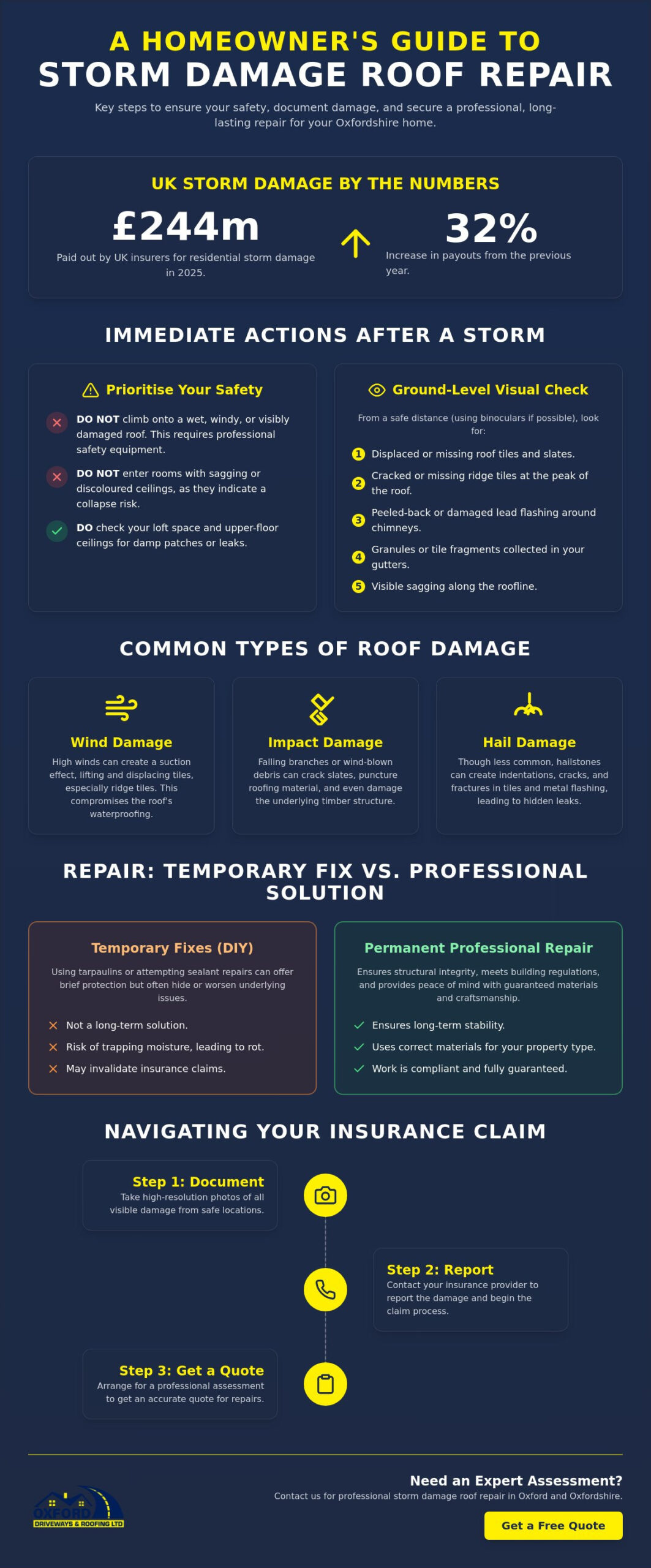
Temporary Fixes vs. Permanent Professional Intervention
When a storm leaves a visible gap in your home’s defences, the immediate priority is protecting your interior from further water ingress. Whilst the temptation to attempt a DIY patch might be strong, it’s essential to recognise the difference between an emergency stop-gap and a compliant, permanent restoration. UK building regulations are strict regarding structural alterations and thermal performance; unprofessional work often fails to meet these standards. This can lead to significant complications if you ever decide to sell your property or if you need to make a future insurance claim.
Oxford homeowners should be particularly cautious of “cowboy” contractors who often circulate in the area immediately following a severe weather event. These individuals frequently promise rapid, cheap fixes but lack the specialised knowledge required for heritage properties or modern flat roof systems. Entrusting your storm damage roof repair to an unverified source puts your home at risk and may invalidate your existing insurance policy. A professional approach ensures that every repair is documented and executed to a standard that preserves both the safety and the value of your property.
When is a Temporary Patch Appropriate?
An emergency tarpaulin is an appropriate measure when you have an active leak and a professional contractor cannot attend the site immediately. The goal is to direct water away from vulnerable areas like loft insulation or electrical fittings. However, these covers are not designed to withstand UV exposure or high winds for more than a few days. They can trap moisture against the timber rafters, which encourages fungal growth and rot. You should only use a temporary fix as a bridge whilst waiting for a roofing repairs Oxfordshire specialist to conduct a full, safe assessment of the damage.
The Long-Term Risks of Unprofessional Repairs
Inadequate repairs often mask deeper structural issues that only become apparent months later. If a tile is replaced without checking the underlying felt or battens, moisture can continue to seep into the roof’s core. This hidden damp leads to the slow decay of structural timbers, which is far more expensive to rectify than a standard storm damage roof repair. Additionally, using mismatched or inferior components can ruin the aesthetic appeal of your home. Selecting high quality roofing materials that match your existing tiles or slates is vital for maintaining the architectural integrity of your property. Professional intervention ensures that the repair is seamless, durable, and fully compliant with modern safety standards.
Navigating Insurance Claims for Storm Damage
Managing the financial recovery after a severe weather event is just as critical as the physical restoration of your property. In recent years, insurance providers have become increasingly rigorous in their assessment of claims, often requiring comprehensive proof that the damage was caused by a specific storm rather than gradual deterioration. To ensure your storm damage roof repair is covered, you must act as a diligent historian of the event. This involves gathering evidence immediately after the weather clears and maintaining a precise record of every interaction you have with your insurer and your chosen contractors.
It’s helpful to maintain a dedicated logbook or digital folder for your claim. Record the dates and times of every phone call, the names of the representatives you speak with, and the specific advice or reference numbers they provide. When you reach out to local roofing specialists, insist on receiving detailed, itemised quotes rather than vague estimates. A professional quote that breaks down the costs of materials, labour, and specific structural requirements carries far more weight with an insurance adjuster than a handwritten note on a scrap of paper.
Documenting Damage for a Successful Claim
Your documentation strategy should be thorough and multi-layered. Start by taking high-resolution, timestamped photographs of any external issues, such as missing slates or displaced ridge tiles. These timestamped digital images serve as the gold standard for insurance adjusters, providing irrefutable evidence that the failure occurred during a specific weather window. Don’t forget to document the interior as well; photographs of water stains on ceilings or damp patches in the loft provide essential context for the external damage. If you find fragments of fallen tiles or broken masonry in your garden, collect them as physical evidence to show the adjuster during their site visit.
Understanding “Fair Wear and Tear” Clauses
One of the most common reasons for a rejected claim is the “fair wear and tear” clause. Insurers draw a sharp distinction between a sudden, accidental storm event and a failure resulting from a lack of regular roof maintenance. If an adjuster determines that your roof was already in a state of neglect before the storm, they may argue that the weather merely accelerated a pre-existing issue. Regular professional inspections provide a paper trail that proves your home was in good condition prior to the event, making it much harder for an insurer to dispute your claim. If you’re facing resistance from your provider, a professional survey from a trusted specialist can provide the technical backing needed to justify the necessity of your storm damage roof repair. To ensure your claim is supported by accurate, professional documentation, you can contact our team for a detailed repair estimate.
Expert Storm Damage Roof Repair in Oxford and Oxfordshire
Selecting a local specialist is not merely about convenience; it’s about ensuring your home is restored using methods that respect its unique architectural history. Oxfordshire presents specific challenges, from the delicate nature of limestone masonry to the requirements of modern energy standards. A generic repair might address a visible leak, but a professional storm damage roof repair from a regional expert ensures the structural integrity of the entire system is preserved. By focusing on durability and precision, we help homeowners move past the anxiety of the storm and into a period of long-term stability.
A professional restoration is also the ideal time to future-proof your home. With the 2026 Future Homes Standard requiring enhanced insulation for many projects, a significant repair provides the opportunity to upgrade your roof’s thermal elements to meet modern U-value requirements. This methodical approach doesn’t just fix the immediate damage; it enhances the energy efficiency and resilience of your property for years to come. We walk you through each stage of this process, from restoring unstable chimneys to reinforcing pitched systems, ensuring you understand the benefits of every material choice and structural upgrade.
Restoring Heritage and Period Properties
Oxford is renowned for its historic skyline, and maintaining this character requires a deep understanding of traditional craftsmanship. When undertaking roof repairs for older homes Oxfordshire, we prioritise the use of authentic materials such as natural slate or clay tiles. This attention to detail ensures that every repair complies with local conservation area guidelines whilst providing a seamless aesthetic match. Whether we are involved in chimney rebuilding or replacing displaced lead flashing, our goal is to maintain the period charm of your property while making it resilient against future weather events.
Why Oxford Driveways And Roofing Ltd. is Your Trusted Partner
At Oxford Driveways And Roofing Ltd., we treat every project as a commitment to your home’s future. Our team manages the entire recovery process, from providing transparent new roof cost Oxford estimates to the final installation of high-performance guttering and downpipes. We specialise in a variety of systems, including robust flat roof systems that meet the latest thermal efficiency standards. By using premium-grade materials and proven methods, Oxford Driveways And Roofing Ltd. offers a safe and guaranteed outcome for every project. Our focus remains on clear communication and expert skill, ensuring that your storm damage roof repair provides the lasting protection your property deserves.
Securing Your Property Against Future Storms
Recovering from severe weather requires a methodical approach that prioritises your safety and the long-term stability of your home. By conducting a careful ground-level assessment and maintaining meticulous records for your insurance provider, you lay the essential groundwork for a successful claim. It’s vital to remember that temporary patches are only short-term solutions; true peace of mind comes from addressing the root cause of the damage with professional precision and care.
Our team at Oxford Driveways And Roofing Ltd specialises in both modern and heritage roofing, ensuring that every storm damage roof repair meets the highest standards of craftsmanship. We utilise premium-grade materials on every project to provide lasting resilience against Oxfordshire’s unpredictable weather. With fully guaranteed workmanship, you can rest assured that your property is in the hands of seasoned specialists who value quality and transparency. If you’re concerned about the integrity of your roof, taking action now will protect your home’s value and ensure a safe environment for your family.
Contact Oxford Driveways And Roofing Ltd for a professional storm damage assessment today. We are here to guide you through the restoration process with expert skill and reliable results.
Frequently Asked Questions
Is storm damage to a roof covered by standard UK home insurance?
Standard buildings insurance typically covers sudden storm damage, provided the property has been kept in a reasonable state of repair. Insurers distinguish between accidental weather impact and “wear and tear”, so they might reject claims if the roof was already neglected. It’s essential to review your specific policy documents to confirm the level of coverage for structural elements and internal water damage.
How long do I have to report storm damage to my roof?
Most insurance policies require you to report damage within a specific timeframe, frequently within 30 days of discovery. Whilst some insurers allow up to a year, delaying your notification can complicate the claim process. Reporting storm damage roof repair needs immediately ensures that the evidence remains fresh and the insurer can’t claim the damage worsened due to your inaction.
Can I claim for a new roof if only a few tiles are missing?
Insurers generally only pay for a full replacement if the cost of repair exceeds the value of the roof or if the structural integrity is compromised. If only a few tiles are missing, they will typically cover the cost of replacing those specific components and any necessary underlay. However, if more than 25% of the roof requires work, UK building regulations may necessitate a more extensive upgrade.
What is considered a “storm” by insurance companies in the UK?
UK insurers often define a storm as an event involving wind speeds of at least 47 mph or extreme precipitation like heavy hail. They use local weather station data to verify conditions in your part of Oxfordshire on the date of the incident. If the recorded weather doesn’t meet their specific threshold, they may classify the event as standard weather rather than a storm.
How much does an emergency roof repair typically cost in Oxford?
Emergency repair costs in Oxford vary based on the time of day and the severity of the hazard. Homeowners should expect to pay a call-out fee for immediate response outside of normal working hours, which covers the initial safety assessment and temporary securing of the property. It’s advisable to check with your insurer first, as some policies include a dedicated emergency assistance helpline.
Should I repair or replace my roof after significant storm damage?
You should consider a full replacement if the storm has damaged more than 25% of the roof’s surface area, as this triggers specific UK building regulations. For heritage properties in Oxfordshire, extensive damage to old timber rafters or widespread tile failure often makes replacement more cost-effective than repetitive patching. A professional survey will determine if the underlying structure remains sound or requires a complete overhaul.
How can I tell if my flat roof has been damaged by a storm?
Flat roof damage often manifests as “ponding”, where water collects in new depressions caused by structural impact. You should also look for punctures in the membrane from flying debris or signs of lifting at the edges where the wind has caught the flashing. Inside, check for fresh damp patches on the ceiling which indicate that the waterproof seal was breached during the weather event.
What happens if I ignore minor storm damage on my roof?
Ignoring minor issues like a single displaced tile can lead to catastrophic structural rot and internal damp. Small gaps allow water to seep into the timber battens and rafters, which eventually compromises the entire stability of the property. Additionally, failing to address known storm damage roof repair needs often invalidates future insurance claims, as insurers view subsequent failures as a result of poor maintenance.