
Did you know that neglecting your driveway for just a few seasons can reduce the lifespan of your paving by more than a decade? Many homeowners view their entrance as a permanent fixture, but without consistent block paving maintenance Oxford, the local weather can quickly lead to persistent weed growth and shifting blocks. We understand that seeing your premium investment marred by moss or oil stains is frustrating, especially when you want your home to reflect the high standards of the surrounding Oxfordshire area.
In this guide, we’ll share the professional methods used to keep your driveway weed-free and structurally sound for the long term. You’ll learn how to prevent common failures such as sinking or loose blocks whilst maintaining your property’s market value. We will walk you through the essential steps of cleaning, re-sanding, and sealing to ensure your paving remains a durable and attractive asset for years to come. By taking these proactive steps, you can enjoy the peace of mind that comes with a driveway that stays as stable as the day it was first laid.
Key Takeaways
- Effective block paving maintenance Oxford is a proactive process that protects your driveway’s structural integrity against the persistent damp of the Oxfordshire climate.
- Discover why kiln-dried sand is the vital ‘glue’ that keeps your blocks stable and how to replenish it correctly to prevent shifting.
- Learn how to avoid the ‘jet wash trap’ by using professional rotary cleaning methods that protect delicate block edges and the underlying sub-base.
- Follow a tailored seasonal calendar to address winter frost damage and implement summer weed prevention whilst the weather is at its driest.
- Identify the structural red flags, such as sinking or spreading, that indicate when professional restoration is needed to avoid a costly total replacement.
Why Block Paving Maintenance is Essential in Oxford
Maintenance is the proactive care of your driveway’s surface, joints, and sub-base to prevent gradual decay. To understand the basics of these systems, one might ask What is Block Paving? Essentially, it’s a system of individual units that rely on tight, sand-filled joints and a stable foundation to remain functional. In our experience, the block paving maintenance Oxford homeowners invest in today saves them from the heartache of structural failure tomorrow. Without this care, the damp Oxfordshire climate encourages moss and lichen to take root. These organisms trap moisture and eventually compromise the sand joints that hold everything together.
Regular care preserves the structural integrity of your driveway’s foundation. When joints are left empty or filled with organic matter, water penetrates the sub-base, leading to sinking and shifting. Whilst many see cleaning as purely aesthetic, it’s actually a vital health check for the surface. From a financial perspective, a small annual spend on professional cleaning and re-sanding is a wise move. It avoids the daunting prospect of a full replacement, which can often cost over £10,000 for a standard-sized driveway. By acting as a steady, reliable expert, we help you avoid these unnecessary costs through proven preservation methods.
The Role of Kerb Appeal in Oxford Property Values
First impressions are everything in the competitive Oxford property market. A well-maintained driveway significantly enhances the kerb appeal of your home, creating a sense of order and quality before a visitor even reaches the front door. For those living in heritage or period properties near the city centre, maintaining the aesthetic of the entrance is vital for preserving the character of the building. Consistent block paving maintenance Oxford residents prioritise ensures their homes stand out for the right reasons amongst the high-quality architecture of the city. A clean, weed-free entrance provides a psychological boost for homeowners, offering a sense of stability and pride in their property’s appearance.
Common Environmental Challenges in Oxfordshire
Oxfordshire presents unique challenges for external surfaces. During our cold UK winters, frost heave can occur when water trapped in the joints freezes and expands, pushing blocks out of alignment. Additionally, the region’s hard water and specific local soil types can sometimes lead to drainage issues if the surface isn’t kept permeable. Because Oxford is a city of lush greenery and ancient trees, ‘weed seeds’ are constantly airborne. These seeds find a perfect home in neglected joints, where they quickly grow and force the blocks apart. This leads to a cycle of damage that only professional intervention can truly break, ensuring the longevity of your investment through every season.
The Anatomy of Maintenance: Cleaning, Sanding, and Sealing
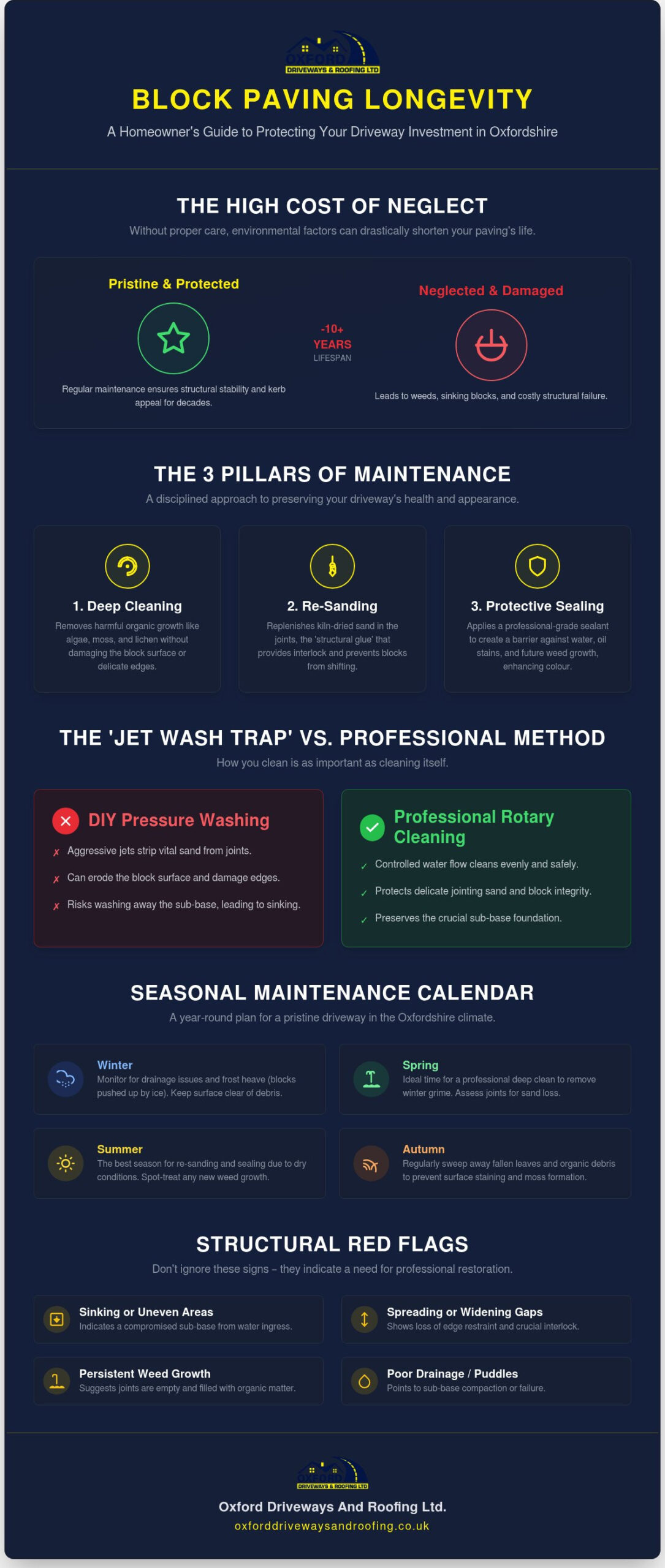
Maintaining a driveway in Oxfordshire requires a disciplined approach to three core tasks: deep cleaning, re-sanding, and sealing. Each stage plays a specific role in preserving the longevity of your exterior surfaces. Effective block paving maintenance Oxford homeowners can rely on starts with deep cleaning to remove organic growth like algae and lichen. This process must be thorough enough to lift deep-seated stains but gentle enough to avoid eroding the face of the blocks. Following UK paving industry standards, we recommend a methodical approach that prioritises the structural health of the installation over a quick visual fix.
Why Jointing Sand is Non-Negotiable
The sand between your pavers is far more than a filler; it’s the structural ‘glue’ that enables ‘interlock’. This mechanical friction allows the weight of a vehicle to be distributed across the entire surface rather than a single block. When joints become ‘hollow’ due to wind or water erosion, the blocks lose their stability and become prone to shifting or tilting. This instability often leads to water ingress, which can eventually wash away the vital bedding layer underneath. Kiln-dried sand is a fine, moisture-free silica sand used to fill the narrow gaps between blocks, providing the friction necessary to prevent lateral movement and ensure structural stability.
The Benefits of High-Quality Sealants
Applying a professional-grade sealant creates a breathable barrier that protects against the elements. These coatings come in various finishes, including matte for a natural look, satin for a subtle sheen, or gloss for a ‘wet-look’ that makes the stone colours more vibrant. Beyond aesthetics, sealants bind the jointing sand together, making it much harder for heavy rain to wash it away or for weed seeds to take root. They also provide a vital layer of protection against tyre marks and oil spillages, ensuring that accidental leaks don’t become permanent eyesores. This protective layer is particularly important for block paving maintenance Oxford properties require to withstand the varied British weather.
Timing is a critical factor in the success of these maintenance tasks. Cleaning and re-sanding are best performed during dry spells in late spring or summer, as the blocks and joints must be bone-dry for the sand to flow correctly. Sealing should only take place once any efflorescence has naturally cleared and the surface is perfectly clean. If you are concerned about the current state of your driveway, our team provides expert Block Paving Installation and restoration services to bring it back to its best. Taking these steps ensures your driveway remains a stable, attractive, and high-value feature of your home for decades.
Professional Rotary Cleaning vs. DIY Pressure Washing
Many homeowners across Oxfordshire reach for their domestic pressure washer as soon as the first signs of green algae appear. However, this often leads to what we call the ‘Jet Wash Trap’. While the surface might look temporarily cleaner, the high-pressure lance of a standard jet wash can inadvertently blast away the vital jointing sand and even destabilise the bedding layer beneath the blocks. Professional block paving maintenance Oxford relies on specialised rotary surface cleaners. These machines feature rotating bars that spread pressure evenly across the stone, ensuring deep cleaning without the risk of gouging the edges or compromising the structural ‘interlock’ required for stability.
The Risk of Sub-Base Erosion
Aggressive DIY cleaning is a primary cause of driveway failure. High-pressure lances can create voids beneath the paving blocks by forcing water into the sub-base. This erosion leads to ‘sinking’ driveways where individual blocks begin to dip under the weight of vehicles. Professional block paving specialists Oxford prioritise surface safety by using equipment designed to preserve the foundation. Maintaining proper drainage is also a legal requirement, as outlined in the official government guidance on permeable paving. Professional methods ensure your driveway remains compliant whilst protecting the investment you’ve made in your property’s exterior.
Choosing the Right Cleaning Agent
The choice of cleaning agent is just as vital as the equipment used. Many DIY enthusiasts use household bleach, which often fails to kill the spores of moss and lichen at the root. We utilise professional-grade biocides that are safer for your garden and more effective at preventing regrowth. These agents are also designed to treat ‘efflorescence’, the white salt staining that can appear on new blocks. For stubborn oil stains, we apply specific degreasers that lift the residue without discolouring the stone. This methodical approach ensures a deep clean that reaches dirt DIY tools simply miss, providing a lasting result that protects your home’s kerb appeal. The reality is that professional equipment provides a depth of clean that consumer-grade tools cannot match, ensuring your driveway stays cleaner for much longer.
Seasonal Maintenance Calendar for Oxfordshire Homeowners
A successful approach to block paving maintenance Oxford requires a schedule that respects the local climate. Our region’s weather patterns, from damp autumns to freezing winters, dictate when certain tasks are most effective. By following a structured calendar, you can address environmental challenges before they lead to structural failure. This methodical care ensures that your driveway remains a durable asset throughout the year. It’s a simple way to protect your investment whilst keeping your property’s entrance looking its best.
Spring and Summer: Peak Care Months
Once the winter thaw is complete, it’s vital to perform a thorough inspection. Check for any blocks that have become loose or shifted during the frost cycles mentioned earlier. Spring is the ideal time for the ‘Big Clean’ to remove the salt and grime that accumulates during the colder months. Applying weed inhibitors early in the season prevents growth from taking hold in the joints before the growing season peaks. This preparation ensures your block paving Abingdon or Oxford installation remains fresh and inviting for summer gatherings. Summer’s dry spells provide the perfect window for sealant inspections; the materials require bone-dry conditions to set correctly if a top-up is needed.
Autumn and Winter: Prevention and Protection
As the leaves begin to fall across Oxfordshire, prompt management is essential. Wet leaves left on the surface can release tannins that cause stubborn staining. These organic materials also tend to gather in drainage channels, leading to localised flooding during heavy rain. Regular sweeping prevents the formation of ‘black spot’ lichen, which is notoriously difficult to remove once established. During winter, be cautious with de-icing. Traditional rock salt can sometimes cause ‘spalling’ or surface damage to certain block types. We recommend using plain grit or sand for traction instead. When clearing snow, use a plastic shovel rather than a metal one to avoid scratching the surface of your paving blocks. Managing gutter runoff is equally important. Ensure your downpipes aren’t discharging directly onto the driveway, as this concentrated flow can wash away jointing sand over time.
Adhering to this seasonal rhythm protects the long-term health of your driveway. If you notice structural issues like sinking or significant spreading during your inspections, professional intervention is the safest course of action. For expert advice or a full restoration, we invite you to explore our Block Paving Installation and maintenance services to ensure your home’s entrance remains in peak condition. Taking these small steps throughout the year provides the peace of mind that your driveway is built to last.
Professional Restoration: When DIY Isn’t Enough
Whilst routine sweeping and seasonal cleaning can extend the life of your driveway, there comes a point where surface-level care is no longer sufficient. Identifying structural red flags early is essential to prevent a complete collapse of the paving system. Sinking areas, often caused by the sub-base erosion discussed in previous sections, or spreading edges where the restraint has failed, are clear indicators that professional intervention is required. Oxford Driveways And Roofing Ltd specialises in restoring ‘lost’ driveways that have been neglected or poorly installed, bringing them back to a safe, level, and visually stunning condition.
The restoration process is methodical and thorough. Rather than simply patching over problems, we lift the affected blocks, clear away organic debris, and re-level the underlying bedding layer. Once the foundation is restored to the correct specifications, the blocks are re-laid, re-sanded, and sealed. This approach ensures a stable outcome that can last for the remainder of the paving’s 20 to 25-year expected lifespan. Investing in professional block paving maintenance Oxford homeowners can trust is far more cost-effective than allowing structural damage to worsen until a total replacement is the only option. It provides the peace of mind that your entrance is once again structurally sound.
Expert Re-levelling and Repair
One of the most common issues we address is ‘puddling’, where standing water indicates a failure in the driveway’s levels or drainage. We fix these issues without the need for a full reinstall by precisely adjusting the sub-base in targeted areas. For those living in older Oxford estates or heritage properties, matching the original block colours is a priority. We source premium-grade materials that blend seamlessly with your existing paving, ensuring that repairs are invisible and the aesthetic remains consistent. This attention to detail defines our role as a trusted specialist, using only high-quality materials for all patch work to ensure the repair is as durable as the original installation.
Getting a Professional Assessment
Every driveway has its own unique set of challenges based on local ground conditions and usage. A professional site survey in Oxfordshire allows us to identify the root cause of any failure, whether it’s related to soil type or heavy vehicle use. We then tailor a maintenance or restoration plan specifically to your paving type, whether you have tumbled stone for a rustic look or riven blocks for a more modern feel. This disciplined approach simplifies the decision-making process for you, focusing on long-term stability rather than a quick fix. If you are ready to protect your home’s kerb appeal, Contact Oxford Driveways And Roofing Ltd for a free maintenance quote today. Our team is here to provide the expert guidance and high standards needed to ensure your driveway remains a durable asset for years to come.
Securing the Future of Your Oxfordshire Driveway
A well-maintained driveway is more than just a clean entrance; it’s a structural asset that requires consistent care to survive the local climate. By prioritising professional block paving maintenance Oxford homeowners can prevent the gradual erosion of the sub-base and the invasive growth of weeds that compromise stability. We’ve explored how the correct combination of deep cleaning, kiln-dried sanding, and high-quality sealing creates a durable barrier against the elements whilst preserving the vibrant aesthetic of your stone. Taking these proactive steps today ensures that your property remains safe, level, and visually striking for the long term.
At Oxford Driveways And Roofing Ltd, we rely on our expert local knowledge of Oxford ground conditions to provide results that are built to last. Our team uses premium-grade materials and proven techniques to ensure your property remains a source of pride. Because all our workmanship is fully guaranteed, you can enjoy total peace of mind knowing your investment is in safe hands. If you’re ready to restore the structural integrity and beauty of your entrance, you can Request a Professional Block Paving Maintenance Quote today. Let’s work together to keep your home looking its best for many years to come.
Frequently Asked Questions
How often should I clean and seal my block paving in Oxford?
You should aim for a deep clean every three to six months and re-seal the surface every two to three years. This frequency ensures that organic growth doesn’t take root and the protective barrier remains effective against the damp Oxfordshire climate. Regular block paving maintenance Oxford homeowners perform helps prevent the sand from washing away, which is vital for the structural stability of the entire driveway.
Can I use a normal pressure washer on my block paving?
You can use a standard pressure washer, but it carries a high risk of blasting out the jointing sand and destabilising the sub-base. If you choose to do it yourself, keep the nozzle at a shallow angle and avoid pointing it directly into the joints. We recommend professional rotary cleaners instead, as they distribute pressure evenly and protect the delicate edges of your blocks from erosion.
How do I stop weeds from growing between my paving blocks?
The most effective way to stop weeds is to ensure the joints are always completely filled with kiln-dried sand. Weeds usually grow in the accumulated dirt that sits on top of empty joints rather than through the sub-base itself. Applying a high-quality sealant binds the sand together, making it much harder for airborne seeds to germinate and take root in your driveway joints.
What is the best way to remove oil stains from a driveway?
You should blot up fresh oil spills immediately using an absorbent material like cat litter or sawdust rather than scrubbing them. For older, stubborn stains, a professional-grade degreaser or a specific oil-remover chemical is usually required to lift the residue without discolouring the stone. If the stain has penetrated deeply, it’s sometimes more effective to replace the individual affected blocks for a seamless finish.
How long does it take for block paving sealant to dry?
Most modern sealants are touch-dry within two to four hours, but you should wait at least 24 hours before driving a vehicle onto the surface. The exact timing depends on the temperature and humidity levels in Oxford at the time of application. It’s essential that the driveway remains completely dry during the curing process to ensure the sealant bonds correctly with the blocks and jointing sand.
Is it normal for my block paving to have white powdery stains?
Yes, these white marks are known as efflorescence, which is a natural occurrence caused by salt migrating to the surface of the concrete. It doesn’t affect the structural integrity of your paving and will usually disappear on its own through natural weathering over several months. If you find it unsightly, there are specific acid-free cleaners that can help remove it, but patience is often the best approach.
Why is my block paving sinking in certain areas?
Sinking usually happens because the sub-base has been compromised, often due to poor initial installation or water eroding the bedding layer. When water penetrates through empty joints, it can wash away the sand underneath, creating voids that lead to dips under the weight of a car. Professional block paving maintenance Oxford specialists can fix this by lifting the blocks and restoring the foundation to its correct level.
Can I salt my block paving during a cold Oxford winter?
You should avoid using traditional rock salt on certain types of block paving as it can cause surface scaling or ‘spalling’ over time. The chemical reaction between the salt and the concrete can weaken the face of the blocks, leading to unsightly surface damage. We recommend using plain grit or sand to provide traction during icy spells, as these materials don’t chemically attack the stone’s surface.